Passive House Retrofitting Strategies: Longevity and Efficiency
 by Ben Leer - March 9, 2026
 No comments
High Performance and Passive House Retrofitting Strategies for Healthy, Resilient, and Sustainable Buildings.
How long should a building last? This question has shifted over time. Do we build for the length of a 30-year mortgage, 50 years, or a century? The reality is that buildings can last as long as we decide they are worth maintaining. Ancient structures like the pyramids or the Pantheon remind us of this. When we construct buildings thoughtfully and care for them, they can endure for thousands of years.
Most buildings in today’s built environment are unlikely to last that long. We often hear that “they don’t make things like they used to.” This applies to buildings as much as to consumer products. Efficiency, speed, and cost reduction have shaped modern construction. While these forces made housing more accessible, they often came at the expense of durability and long-term performance.
In the United States, stick-frame construction dramatically reduced material use and labor requirements. Many people assume these systems are inherently short-lived. However, that assumption is not always true. I grew up in a balloon-framed house that was already over one hundred years old. It remains structurally sound today. With proper care, it will likely last another century or more.
How do we treat our existing buildings so they continue to serve us for centuries?
Maximizing Our Legacy Assets
Existing buildings often present real challenges. They may be inefficient, uncomfortable, or unhealthy by modern standards. Outdated layouts and high operating costs for heating and cooling are common. In some cases, moisture issues or poor ventilation create legitimate health concerns. Faced with these problems, demolition can seem like the simplest solution.
However, tearing down a building ignores the energy and cultural value already embedded in it. It contradicts the idea that buildings should be long-lived assets rather than disposable products. We have the tools and knowledge to do better. With Passive House retrofitting strategies, we transform existing buildings to meet modern expectations for comfort and operational efficiency.
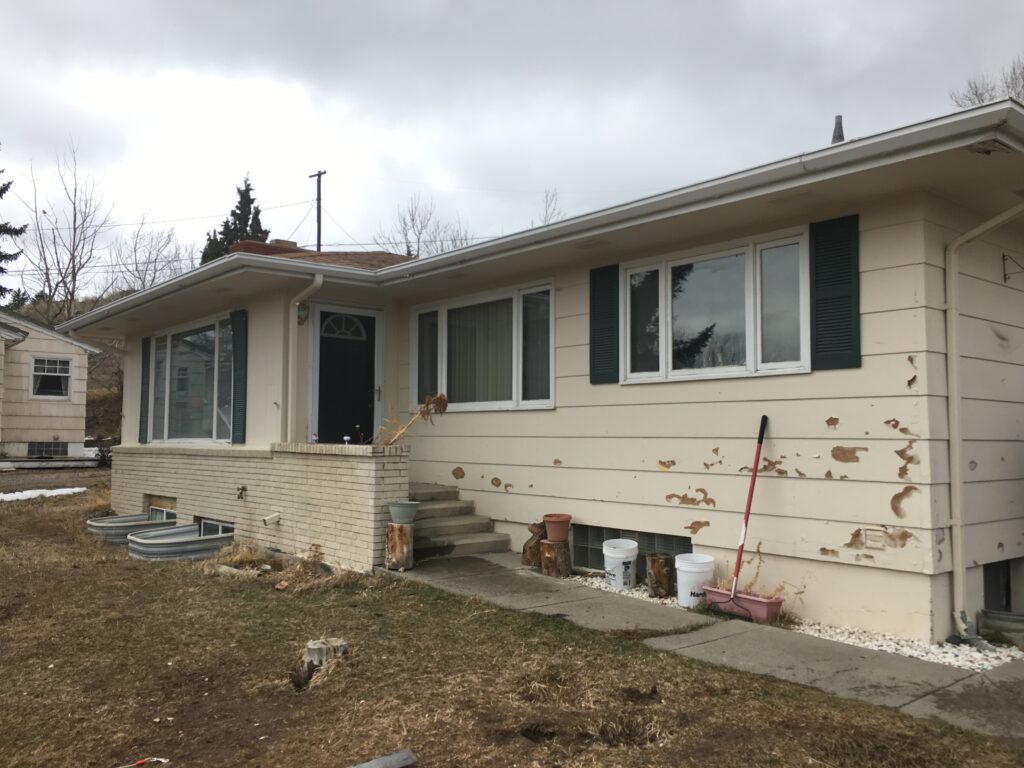
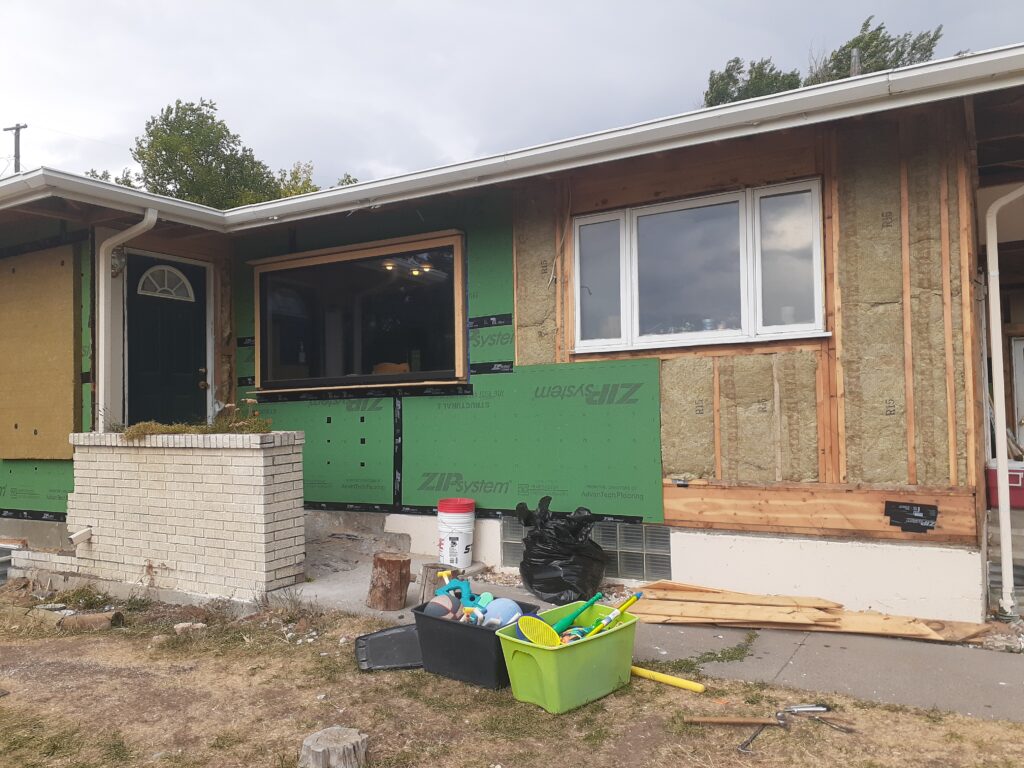
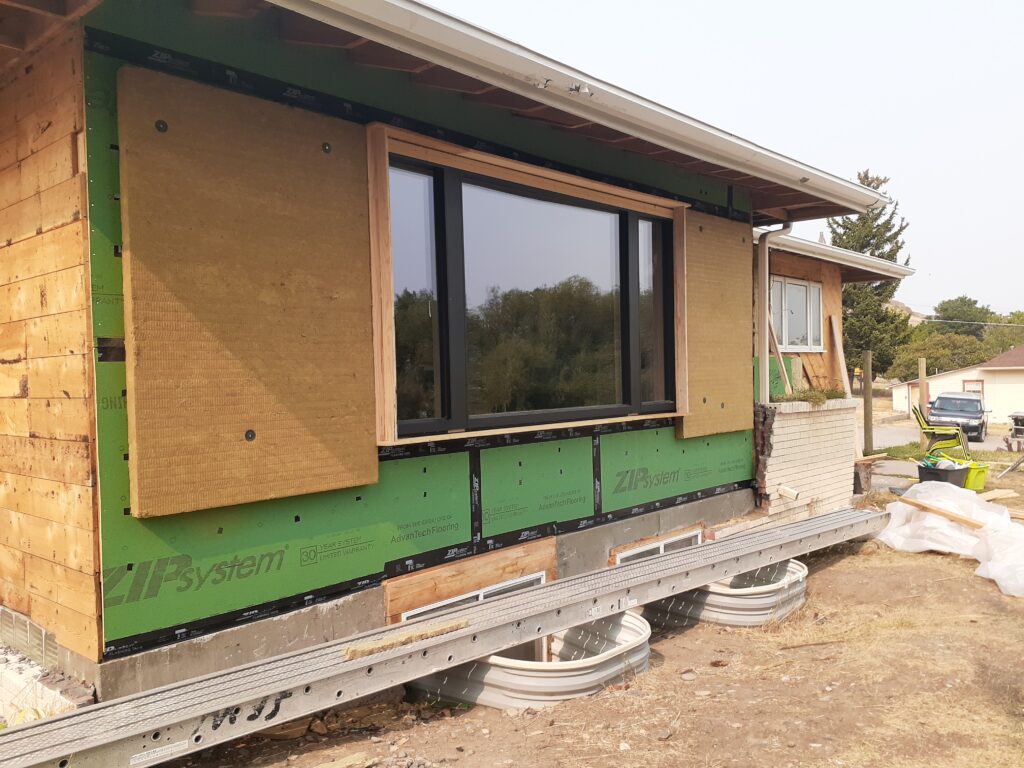
The Three Pillars of Deep Energy Retrofits
Buildings are for people. Therefore, they must be safe, healthy, and pleasant to inhabit. The materials must be durable, and the spaces must be resilient to change. We will focus on three areas of high-performance building retrofits: performance, durability, and adaptability. Like the three legs of a stool, each is essential. Remove one, and the system fails.
Performance: Core Passive House Retrofitting Strategies.
Building performance defines how well a structure supports human health while minimizing energy use. High-performance buildings do not rely solely on efficient equipment. Instead, they reduce energy demand at the source and create stable interior conditions.
We can think about performance through a hierarchy of needs. Buildings must satisfy certain fundamentals before comfort and beauty are possible. In retrofit work, skipping these fundamentals leads to underperforming buildings and high operating costs.
Establishing the Control Layers
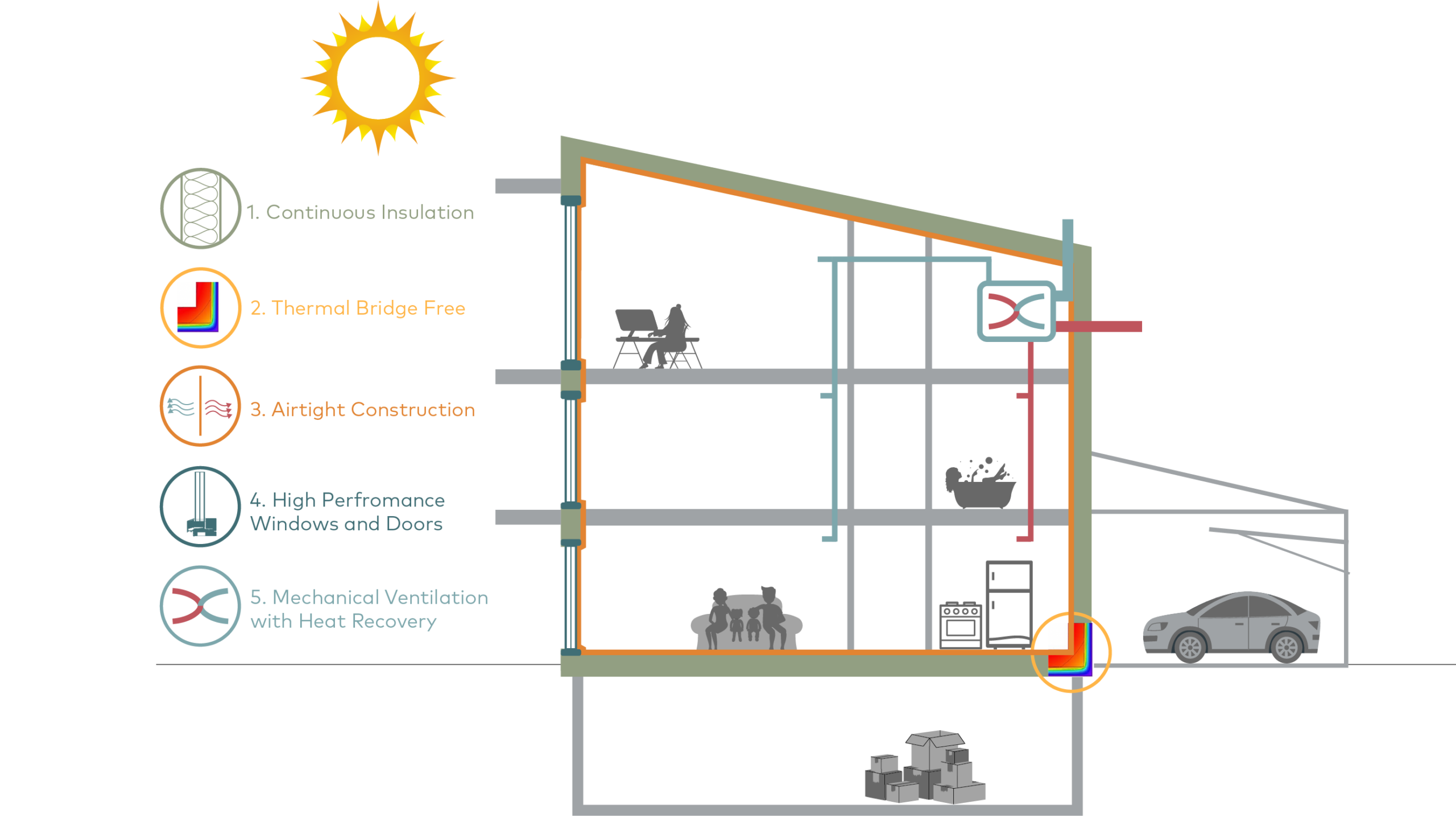
At the most basic level, a building must stand up and keep the elements out. Structural integrity and bulk water control are non-negotiable. Once a building is weather-tight, Passive House retrofits focus on five interrelated performance principles:
-
Insulation: This reduces conduction heat losses and heat gains. The goal is insulation that is continuous and well-integrated with the building’s control layers.
-
Thermal Bridge Reduction: We intentionally identify and reduce weak points. This improves overall energy performance and increases interior surface temperatures.
-
Airtightness: This is foundational to energy performance and indoor air quality. We establish a continuous air control layer that fully encloses the conditioned space.
-
High-performance windows and doors: We prioritize high-performance units with insulated frames and high-quality glazing.
-
Continuous ventilation with heat recovery: This supplies filtered fresh air while removing indoor pollutants with minimal energy penalty.
Optimizing Mechanical Systems
Together, these five principles fundamentally change the role of mechanical systems. Heating and cooling systems can be smaller, simpler, and more reliable. This dramatically increases the operational efficiency of the building. Passive House retrofits create the conditions that allow both beauty and efficiency to endure.
EnerPHit
EnerPHit is a retrofit certification standard developed by the Passive House Institute for upgrading existing buildings to near–Passive House performance. It recognizes that retrofits face more constraints than new builds, so it sets slightly relaxed targets while still demanding excellent energy efficiency, thermal comfort, and airtightness.
Durability: Managing Moisture Risks
Durability is more than just material strength. In practice, most buildings fail because assemblies face uncontrolled moisture and temperature extremes. Water remains the primary cause of building deterioration. It leads to mold growth, rot, and premature failure.
In retrofit work, durability begins with understanding how materials interact with water. This includes rain, snow, and moisture transported by air leakage. A durable retrofit must address all of these mechanisms together.
The Systems-Based Approach
The Passive House approach produces durable buildings because it takes a holistic view of enclosure performance. For example, airtightness is a moisture-control strategy as much as an energy strategy. Airtight assemblies reduce the movement of warm air into colder parts of the enclosure. This lowers the risk of condensation and rot.
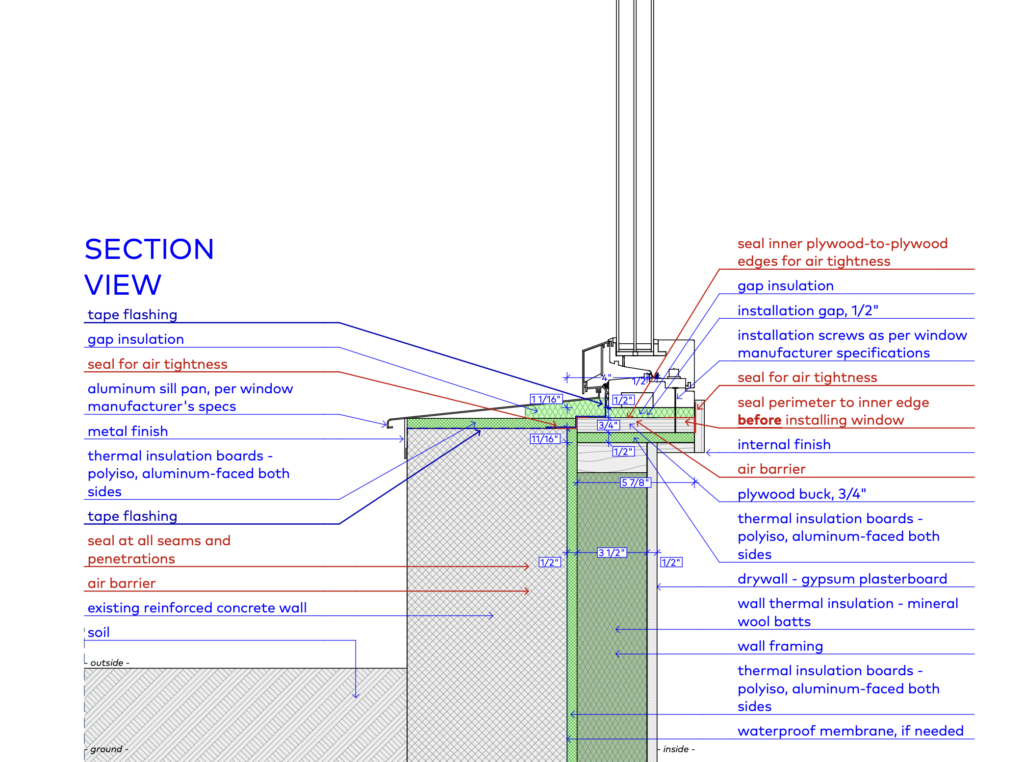
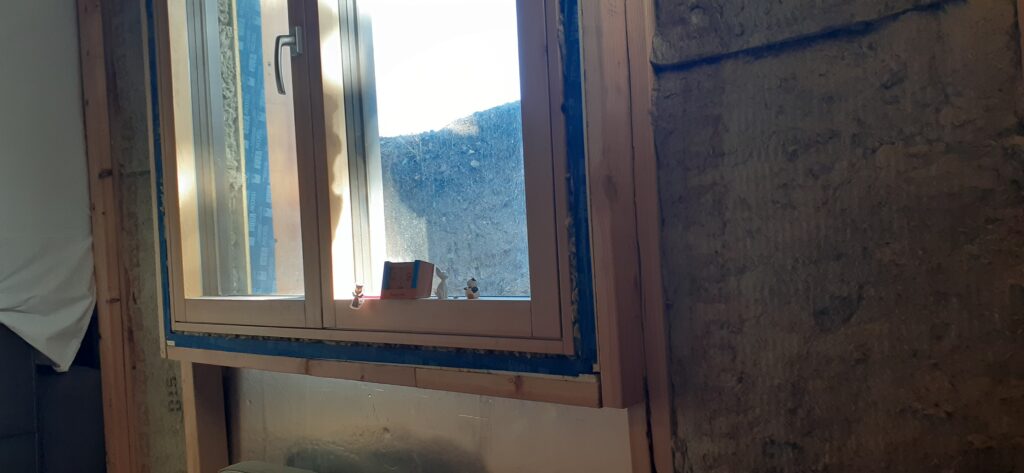
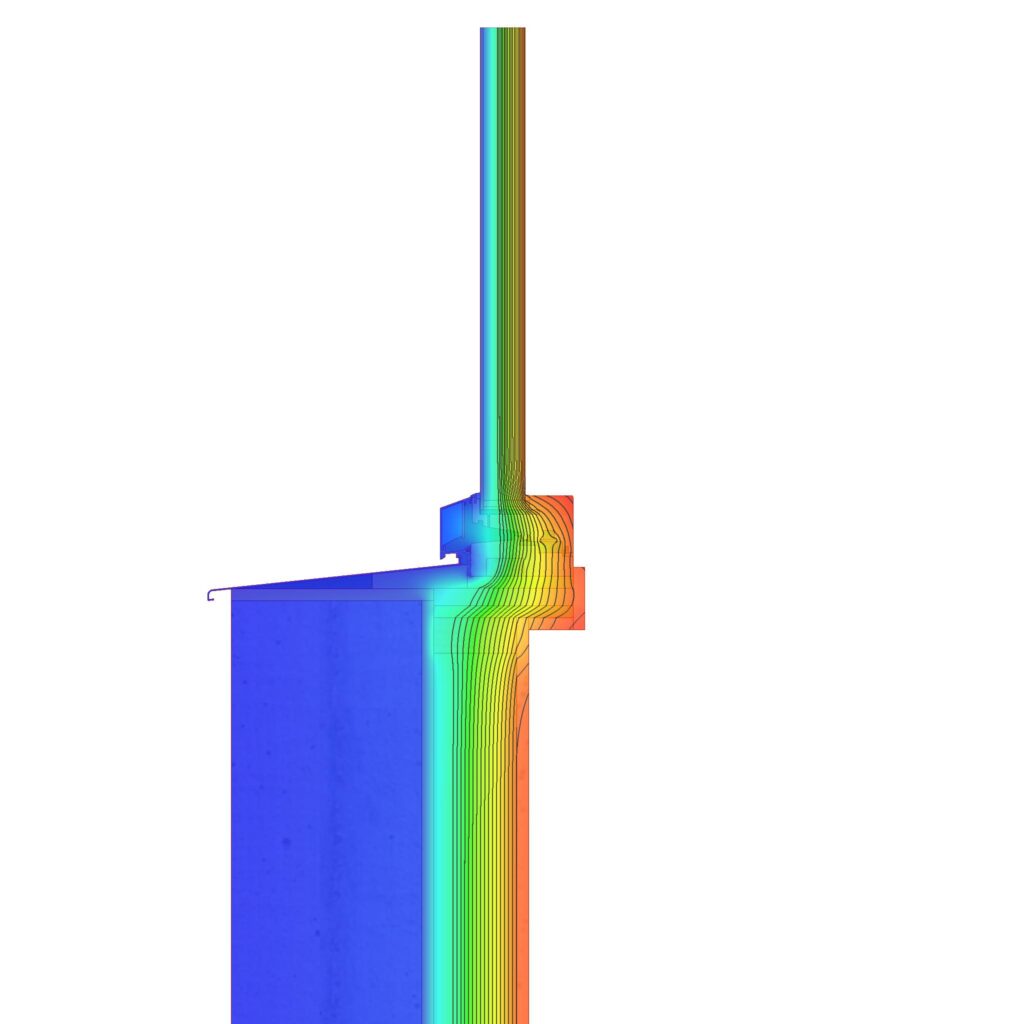
Thermal bridge analysis further reinforces durability. Thermal bridges are locations where interior surface temperatures can drop. If temperatures drop too low, condensation occurs. We identify and mitigate these conditions to keep surfaces warmer and drier.
Avoiding “Quick Fix” Failures
A common retrofit example highlights the difference between a systems-based approach and a “quick fix.” Many people use closed-cell spray foam as a magic bullet. However, spray foam performance depends heavily on consistent installation. It is not a reliable air barrier because it can separate as buildings shift. A small gap can cause moisture to condense and trap behind a vapor-impermeable layer. This “solution” can actually make the building less durable.
Adaptability and Energy Flexibility
Buildings that last are buildings that can change. Over time, occupants, technologies, and expectations evolve. A building that cannot adapt is far more likely to be abandoned or demolished. This remains true regardless of how well it performs initially.
Adaptability begins with separating long-term elements from those expected to change. The structural system and building enclosure must be durable and protected. This includes the control layers for air, water, heat, and vapor. Conversely, services such as plumbing, electrical, and mechanical systems should remain accessible and replaceable.
Passive House retrofitting strategies support this separation. Strategies like exterior insulation, rainscreen assemblies, and interior service cavities are essential. These approaches allow the high-performance enclosure to remain intact. Meanwhile, they enable future system upgrades or interior changes without destructive demolition.
The Problem with “Bonded” Materials
Materials that blur this separation often undermine adaptability. Closed-cell spray foam is a clear example. While some promote it as an energy upgrade, spray foam permanently bonds insulation to the structure. It often encapsulates building services as well.
In my own home, a previous owner applied closed-cell spray foam to the basement. The foam buried the plumbing and electrical systems. Updating these systems required chiseling material away. This turned routine maintenance into a destructive process that threatened the operational efficiency of the home.
Overcoming the Technology Barrier
Adaptability also includes energy flexibility. Many older, inefficient buildings rely on oversized mechanical systems. These systems meet high heating and cooling loads but limit our ability to transition to lower-carbon technologies.
While working on my parents’ early-1900s Victorian home, we explored replacing an oil-fired heating system. We wanted to use a heat pump, but the building’s high heating load was a barrier. Typical heat pump systems could not produce water hot enough for the existing radiators. In this case, the barrier was the building’s load, not the technology itself.
By reducing heating and cooling demand, high-performance building retrofits make structures adaptable to future energy technologies. Lower loads allow for smaller mechanical systems. They also make it easier to transition to electrification or district energy. When we combine adaptability with performance and durability, we ensure buildings remain useful and relevant for generations.
Conclusion: Building for the Long Term
Existing buildings represent a massive opportunity for climate action and resilience. Passive House retrofits offer a proven framework for transforming these structures into healthy, durable places to live and work.
Successful retrofits require a skilled workforce. As Director of Training and Education at Emu Passive, I see daily how specialized knowledge is the most critical tool on any job site. Training is just as important as the materials we use.
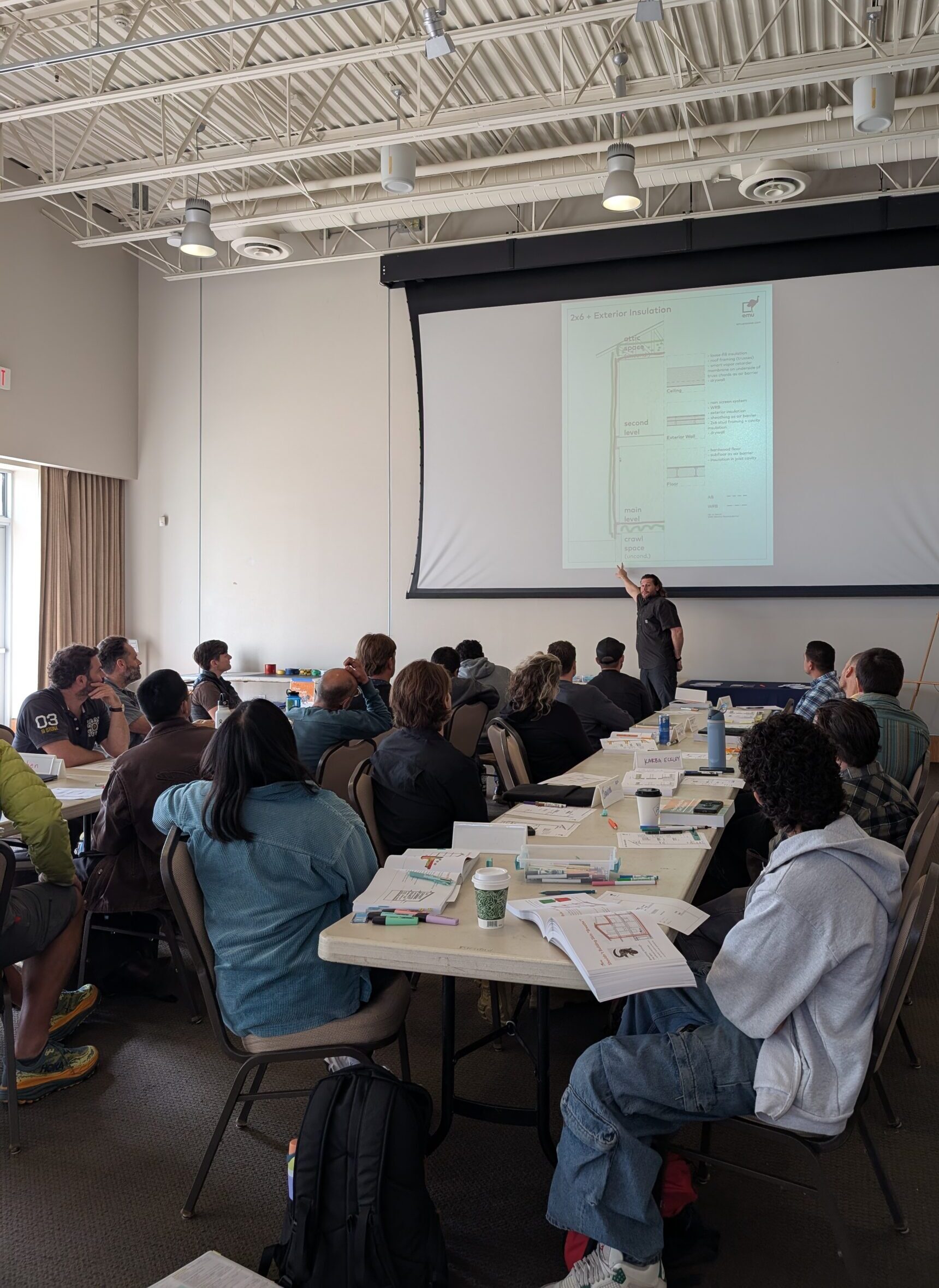
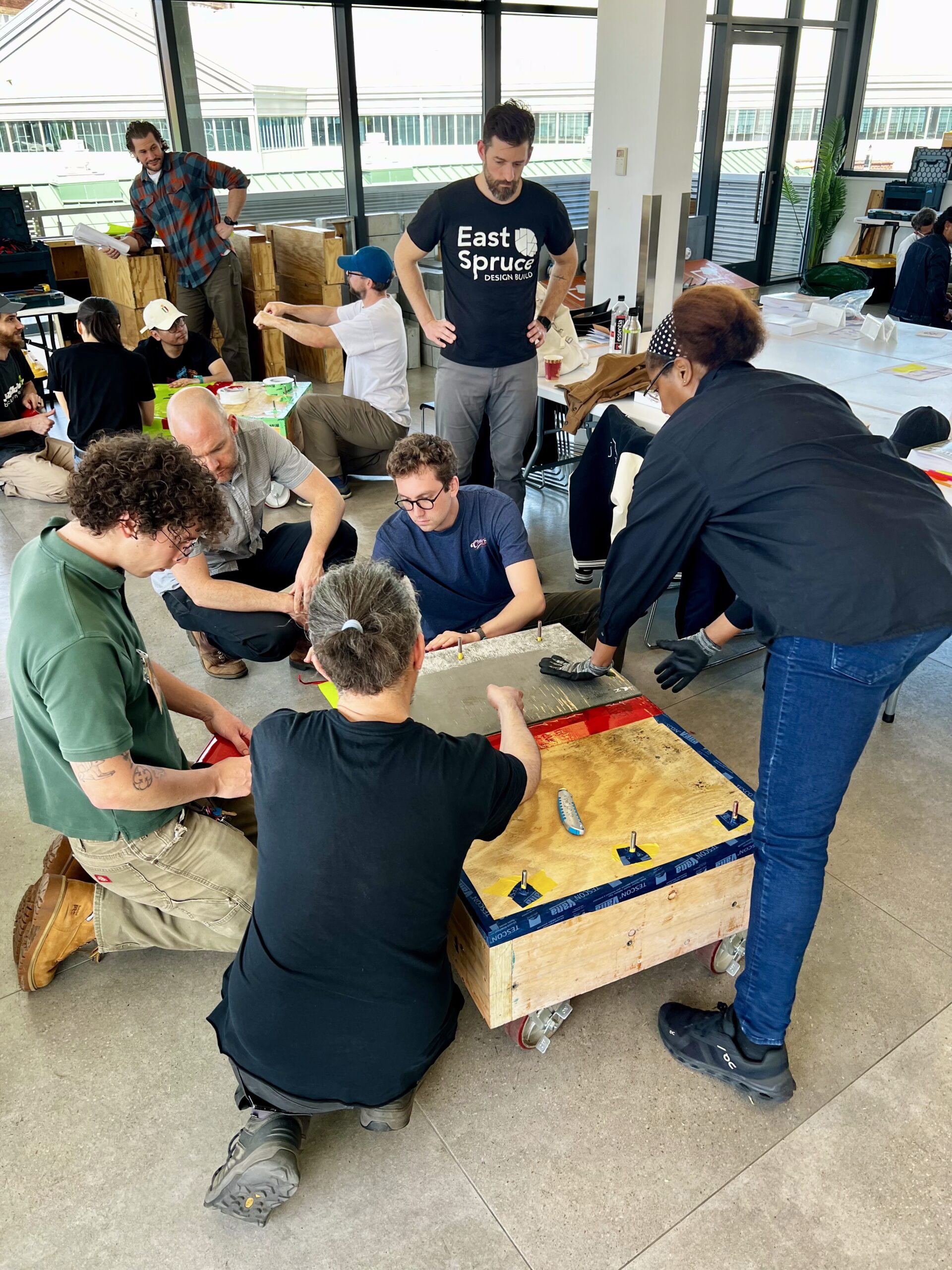
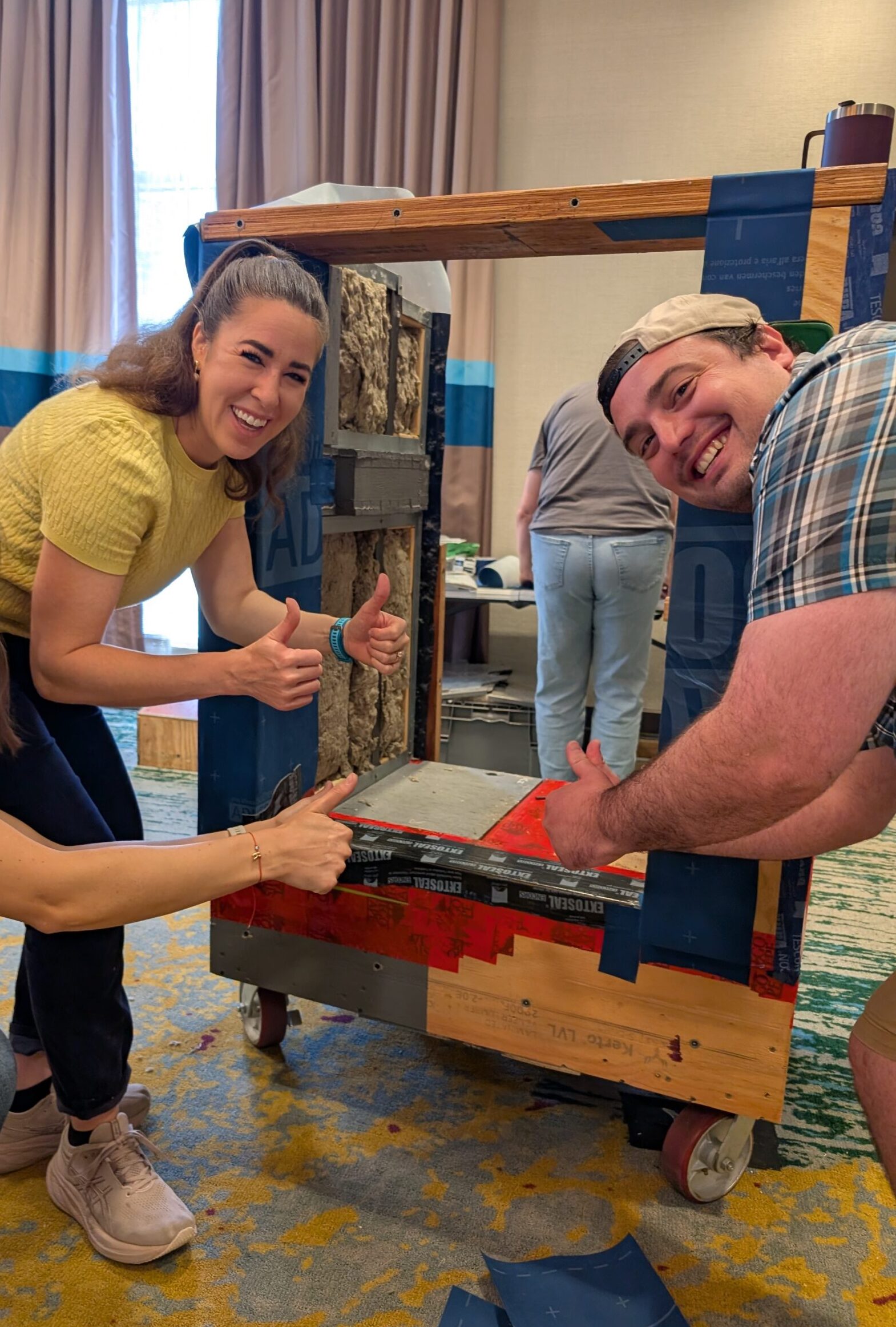
By investing in workforce training, we ensure that people can deliver lasting results. When we combine performance, durability, and adaptability with skilled execution, we extend the life of our buildings. We ensure they are truly worth preserving.
Comments are closed.