We spend about 90% of our lives indoors, yet the air we breathe inside our homes and workplaces is often more polluted than the air outside. Poor indoor air quality (IAQ) is a silent threat, linked to a range of health issues from allergies and asthma to more serious respiratory conditions. Many assume that a new, code-compliant building or even one with a “green” certification guarantees healthy air. Unfortunately, that is often not the case.
True building air quality requires a deliberate, scientific approach that goes far beyond standard construction practices. This is where Passive House excels. By integrating a suite of proven strategies, the Passive House standard delivers exceptional Passive House indoor air quality, creating environments that are not just energy-efficient, but fundamentally healthier for the people inside. This isn’t an accident; it’s the result of rigorous air quality building science.
The Foundation of Clean Air: The Airtight Envelope
The first step to controlling what’s in your air is to control how air gets into your building. Conventional buildings are notoriously leaky. Uncontrolled drafts and cracks in the building envelope allow a host of unwanted elements to infiltrate your indoor space.
An airtight building envelope, a core tenet of Passive House, creates a protective barrier. This has several immediate benefits for building indoor air quality:
- Keeps Pollutants Out: An airtight building shell is your first line of defense against exterior pollutants. This includes urban smog, seasonal pollens, and the growing threat of wildfire smoke. When the only way for air to enter is through a controlled ventilation system, you have the power to filter these contaminants out.
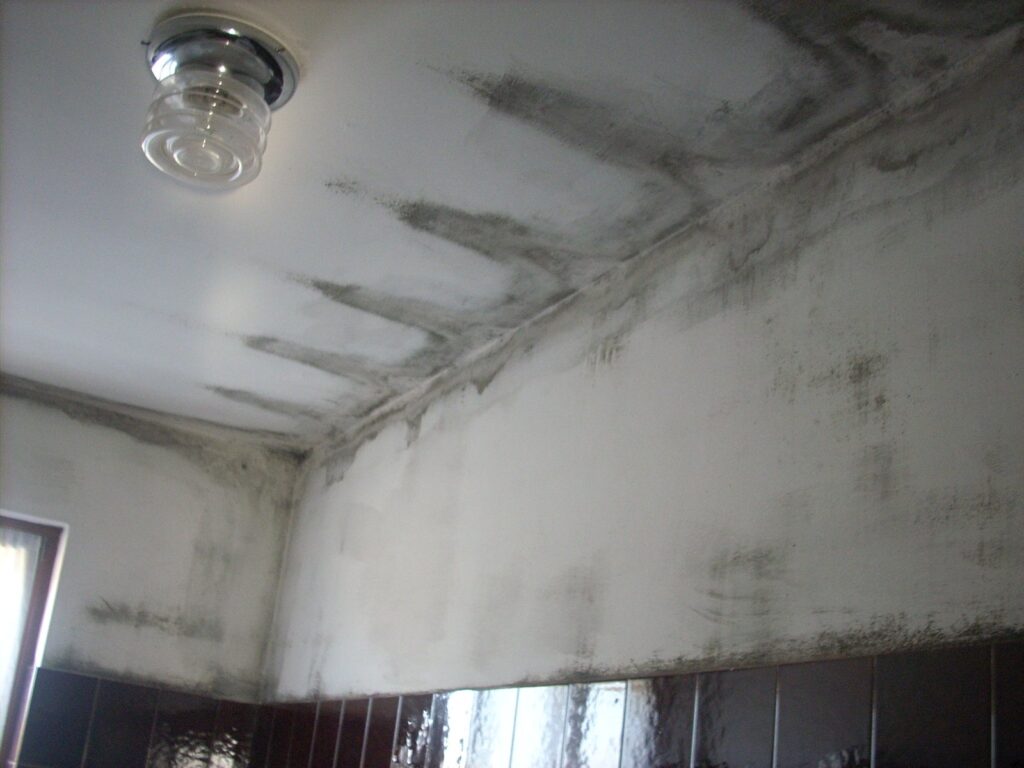
- Controls Moisture: Uncontrolled air leakage is a primary driver of moisture problems. In humid climates, it brings in damp air that can lead to mold, and in cold climates, it can cause condensation within wall assemblies. By stopping these leaks, an airtight envelope dramatically reduces the risk of moisture-driven damage and the subsequent growth of mold and mildew, which are major sources of poor IAQ.
By creating this robust separation between inside and outside with Passive House strategies, we establish a controlled environment. We can then decide exactly what air comes in, and ensure it is clean and fresh.
Continuous Filtered Fresh Air: The Lungs of a Passive House
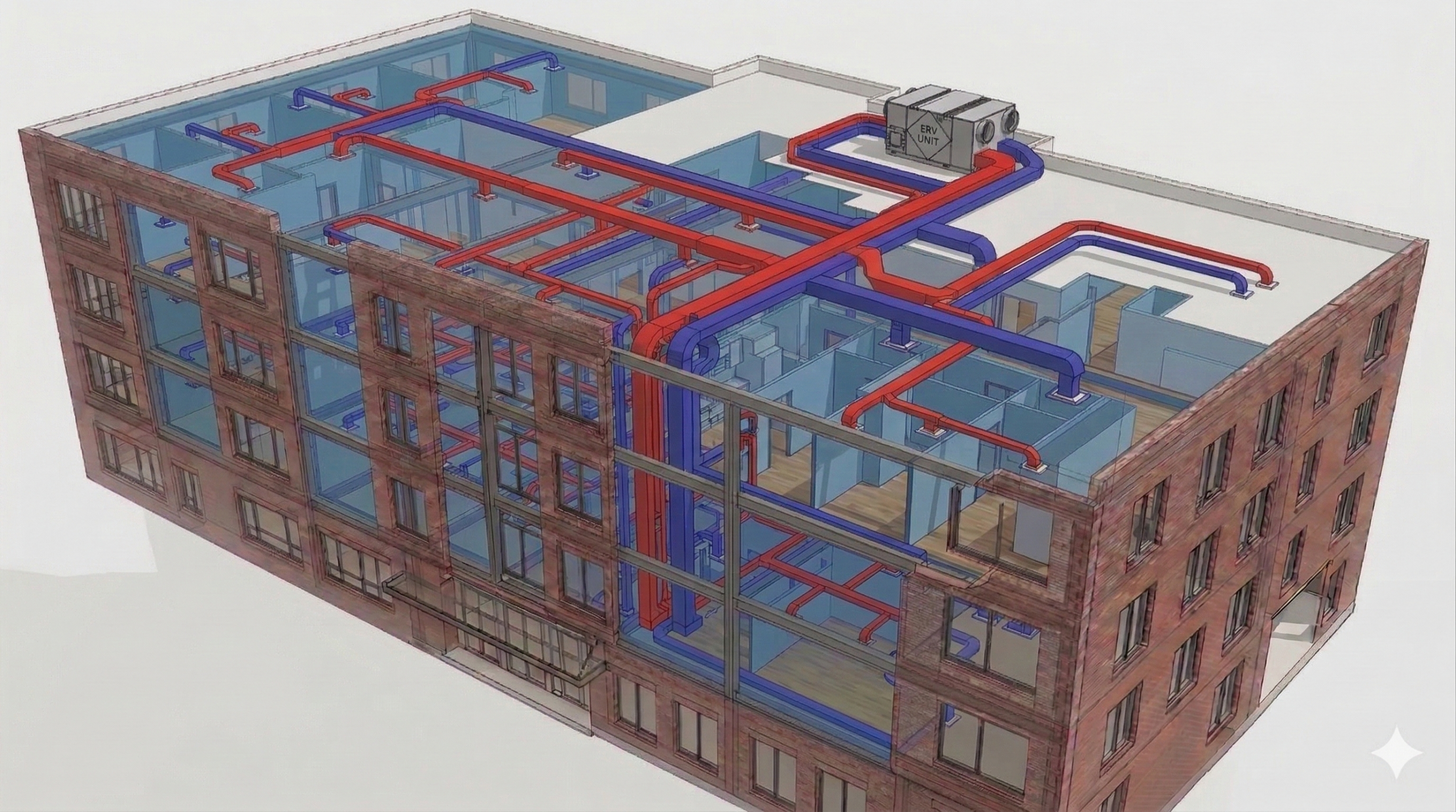
Once you have an airtight building, you must provide fresh air mechanically. This is a non-negotiable component of the Passive House standards. Every Passive House project incorporates a balanced ventilation system with heat recovery, often called a Heat Recovery Ventilator (HRV) or an Enthalpic Recovery Ventilator (ERV, aka Energy Recovery Ventilator).
This system works 24/7 to deliver superior Passive House air quality:
- Constant Air Exchange: The system continuously exhausts stale, polluted indoor air and replaces it with an equal amount of fresh outdoor air. This constant circulation prevents the buildup of internally generated pollutants.
- Advanced Filtration: Before the fresh outdoor air is distributed throughout the building, it passes through high-quality filters. This is where the magic happens. The filters capture and remove harmful particles. While the US-based Phius standard requires a minimum of a MERV 8 filter, the international Passive House Institute (PHI) sets a stricter requirement (MERV13). The gold standard for excellent IAQ is a MERV 13 filter, which can capture up to 85% of cancer-triggering particulate matter (PM2.5) according to ASHRAE. For occupants with extreme sensitivities, or in the event of wildfire smoke, an additional HEPA filter can be integrated for even greater protection.
- Removal of Indoor Pollutants: The continuous air exchange is just as important for removing what’s generated inside. This includes carbon dioxide (CO2) from our own breathing, Volatile Organic Compounds (VOCs) off-gassing from furniture and cleaning products, particulate matter (PM2.5) from cooking, and excess moisture. A Passive House doesn’t let these pollutants accumulate; it actively removes them.
For an in-depth comparison of Passive House standards and building codes, review the Emu Report on Building Standards.
The Importance of Balance: Why Pressure Matters
The best practice for ventilation, as required by Passive House, is balanced ventilation. This means the system is engineered to supply the exact same amount of fresh air as it extracts. This balance is critical for both building durability and occupant health.
- Positive Pressure Dangers: If a system supplies more air than it extracts, the building becomes positively pressurized. This forces indoor, moisture-laden air into the building’s wall and roof assemblies. Over time, this can lead to hidden mold and rot, compromising both the structure and the IAQ.
- Negative Pressure Dangers: Conversely, if a system extracts more air than it supplies, it creates negative pressure. This will suck unfiltered air in from the outside through any tiny crack it can find. This completely bypasses the filtration system, exposing occupants to exterior pollutants and pulling dust and debris from within the building assemblies into the living space.
A balanced system avoids both of these scenarios, ensuring clean air delivery and long-term building health.
Mitigating Invisible Threats: Radon and Moisture
The powerful combination of an airtight envelope and balanced, filtered ventilation provides solutions for other invisible threats to indoor air quality.
Radon Mitigation
Radon is a naturally occurring radioactive gas that can seep into buildings from the ground. It is a leading cause of lung cancer in non-smokers. In a leaky, depressurized building, radon can be easily drawn inside. Research has shown that the Passive House methodology is a viable and effective radon mitigation strategy. A study from Northern Ireland demonstrated that the airtight construction and controlled ventilation inherent to the standard significantly reduce indoor radon concentrations, protecting occupants from this serious health hazard.
Superior Moisture Management
Comfort and health are directly tied to indoor humidity levels. The Passive House approach provides superior humidity control in all climates.
- Cold Climates: In winter, leaky buildings often become uncomfortably dry as heated indoor air escapes and is replaced by cold, dry outdoor air. An airtight envelope dramatically reduces this effect. By choosing an Energy Recovery Ventilator (ERV), which can transfer moisture from the outgoing stale air to the incoming fresh air, you can maintain comfortable and healthy humidity levels without a separate humidifier.
- Hot, Humid Climates: In regions like the southern US, the challenge is keeping excess humidity out. The combination of an airtight envelope and an ERV is incredibly effective. The ERV pre-conditions the incoming fresh air, removing a amount of moisture before it even enters the building. This reduces the dehumidification load on the air conditioning system, saving energy and preventing the damp, sticky conditions where mold and dust mites thrive.
The Critical Last Steps: Commissioning and the Hygiene Criterion
Designing a great system is only half the battle. To guarantee exceptional Passive Building indoor air quality, you must verify its performance.
Testing and Commissioning
Proper Commissioning of the ERV/HRV System
Proper commissioning of the ERV/HRV system is essential to achieving superior indoor air quality. This process involves carefully balancing the supply and exhaust airflows to ensure the system delivers consistent, filtered fresh air throughout the building while effectively removing stale indoor air. Without this critical step, even the best-designed ventilation system may fail to provide the optimal air quality and occupant comfort that Passive House promises.
A study of CU Boulder has shown that having an ERV/HRV is not enough to ensure indoor air quality. Without proper commissioning of the system, the level of indoor air quality in the building remains greatly unpredictable.
Blower Door Testing and the ACH50 Target
Another critical step is the blower door test, which measures the airtightness of the building envelope. Achieving a maximum of 0.6 air changes per hour at 50 Pascals (ACH50) is essential for Passive House performance (although Phius has less stringent requirements). This strict target ensures minimal air leakage, maximizing energy efficiency and maintaining superior indoor air quality. If the blower door test is not performed or the required ACH50 target is not met, occupants risk uncontrolled pollutant entry and compromised building comfort.
The Passive House Hygiene Criterion
Finally, a key factor in the superior IAQ of a Passive House is the prevention of mold and condensation at the source. This is achieved through the Passive House Hygiene Criterion. By using advanced modeling to eliminate thermal bridges (cold spots in the envelope), the standard ensures that all interior surfaces stay warm. This is a crucial step in preventing mold, which needs a cool, humid surface to grow. This proactive strategy is a cornerstone of the Passive House approach, ensuring the building itself doesn’t become a source of indoor air pollution.
FAQs - Indoor Air Quality and Passive House
What is indoor air quality (IAQ)?
Indoor air quality, or IAQ, refers to the quality of the air within and around buildings and structures, especially as it relates to the health and comfort of building occupants. It includes factors like temperature, humidity, and the concentration of pollutants such as dust, pollen, VOCs, mold, and CO2.
How does Passive House improve indoor air quality?
Passive House improves IAQ through a multi-faceted approach: an airtight envelope keeps pollutants out, a continuous balanced ventilation system supplies filtered fresh air 24/7, and the design eliminates the cold surfaces where mold and condensation form. This creates a controlled, healthy indoor environment.
What is an ERV/HRV system?
An ERV (Energy Recovery Ventilator) or HRV (Heat Recovery Ventilator) is a mechanical ventilation system that exhausts stale indoor air and brings in fresh outdoor air. In winter, it transfers heat from the outgoing air to the incoming air, and in summer, it does the reverse. ERVs can also transfer moisture, which helps manage indoor humidity.
What is a MERV 13 filter?
MERV stands for Minimum Efficiency Reporting Value. A MERV 13 filter is a high-efficiency air filter capable of capturing very fine airborne particles, including smoke, bacteria, viruses, and allergens. It is considered the gold standard for achieving excellent building indoor air quality.
Why is an airtight building important for air quality?
An airtight building gives you control. It prevents unfiltered air, pollutants, pollen, smoke, and excess moisture from leaking into your home. It ensures that the only air coming in is fresh air that has passed through the high-quality filters of your ventilation system.
Does Passive House help with wildfire smoke?
Yes. The combination of an airtight envelope and a ventilation system with a MERV 13 or higher filter is extremely effective at protecting occupants from wildfire smoke. The airtight shell stops smoke from infiltrating through cracks, and the filtration system removes the harmful fine particulate matter from the fresh air supply.