Title 24 Airtightness: Why Compliance Still Misses Performance
 by Enrico Bonilauri - June 9, 2026
 2 comments
The Compliance vs. Performance Gap
California likes to present Title 24 as a national leader. On paper, that sounds plausible. The code is long, technical, and full of mandates. But once you read it closely, the picture changes. The newest Title 24 is not a high-performance building standard. It is a compliance machine.
That matters because many teams still assume that if a project passes code, it must be advanced. It is not. The code often behaves more like an asset-rating and carbon-accounting tool than an operational resilience tool. It rewards equipment choices, grid math, and modeled tradeoffs more than durable enclosure design. In practice, that means a weak envelope can still slide through if the software likes the heat pumps, solar, or other offsets.
That is a problem for building air tightness in California and for real-world durability. A building with hidden leaks does not become resilient because the compliance report looks clean. More solar panels do not stop moist air from entering a wall and feeding mold. A better heat pump does not fix a bad air barrier. The same is true for California indoor air quality. A code-compliant ventilation strategy can still leave occupants breathing polluted outdoor air, stale indoor air, or both.
This gap between compliance and performance is the core issue. California has put enormous effort into decarbonization at the grid level, but far less into the building-science basics that shape indoor air quality, health, durability, and passive survivability. If we want buildings that work when systems fail, wildfire smoke rolls in, or the grid goes down, code minimums are not enough.
The Multifamily Double Standard
The most revealing part of the code may be what it does to attached housing. Under Section 160.2(b), attached dwelling units now face a hard target of 0.3 cfm per square foot at 50 Pa. That is not a suggestion. Title 24 now mandates a blower door test. The result must be produced by a third party and uploaded to the Energy Code Compliance registry. In other words, this is not something a project team can wave through with a visual signoff.
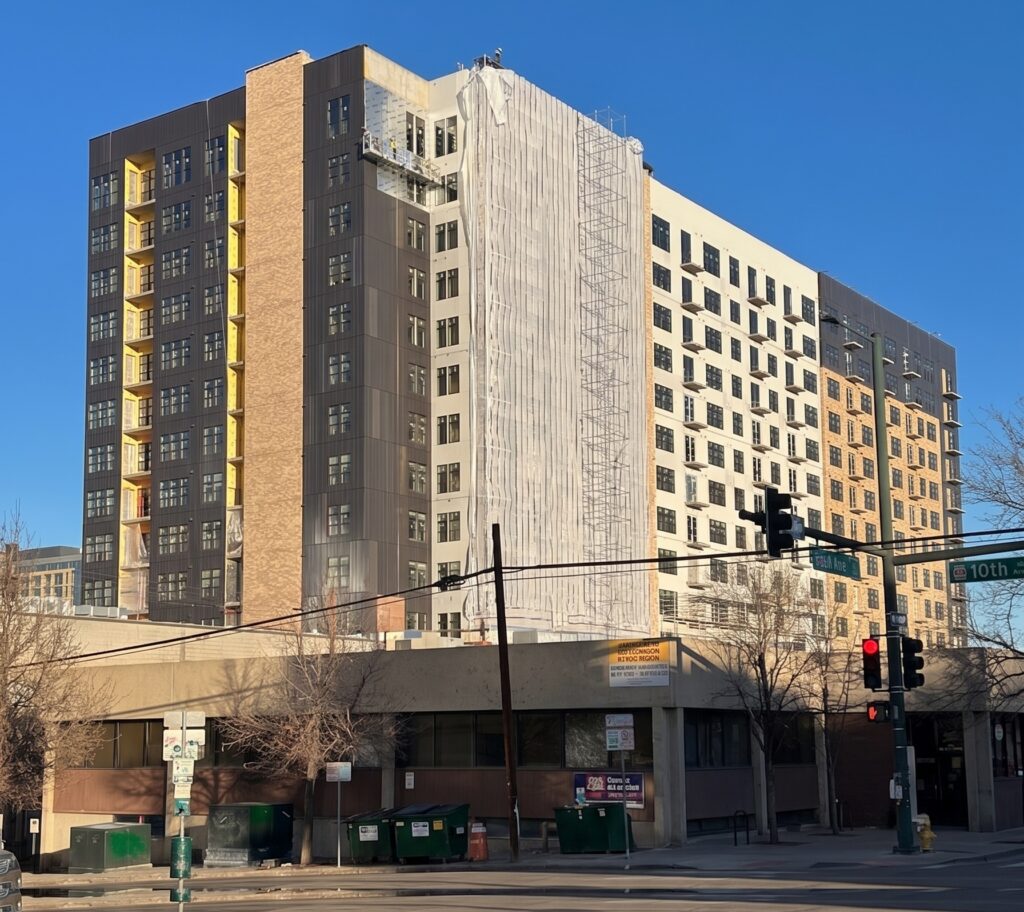
On its face, that sounds like progress. And in one narrow sense, it is. Title 24 compartmentalization testing at least forces the industry to measure something real. Compared with broad and vague visual inspection language, that is a step toward accountability. For attached housing, multifamily compartmentalization testing makes air leakage visible in a way paper compliance never can.
But the structure of the requirement still exposes a larger problem. California is not really teaching teams how to build durable, resilient enclosures. It is forcing them to hit a number. Those are not the same thing.
That distinction matters on real jobsites. When a strict metric appears without a strong culture of enclosure design, the response often becomes reactive. Crews do not rethink sequencing, detailing, framing interfaces, or responsibility gaps early in design. Instead, many teams wait until the end, discover leakage at transitions and penetrations, and then start patching. Out comes the duct tape. Out comes the sealant. Sometimes out comes aerosolized sealing products meant to drag the final reading down just enough to pass. That is not resilient construction. That is compliance by force.
The irony is hard to ignore. California will require a small apartment to undergo a strict Title 24 blower door test, yet it still does not build a consistent code culture around durable air barrier execution across the whole market. The number goes into the registry, the box gets checked, and everyone moves on. But the code is largely silent on whether the approach used to hit that number will last.
This is why comparing Title 24 to Passive House is just laughable.
Passive House is not about chasing one test at the end. It is about a building-envelope-first process. It integrates air barriers, thermal comfort, actual indoor air quality, and durability from the first sketch through construction. It is a quality system, not a scoreboard. In other words, the envelope-first approach of Passive House paves the way to a more resilient and sustainable path to electrification.
And California’s multifamily rules become even stranger when you compare them to the rest of the market. A small affordable unit faces mandatory physical testing. Meanwhile, other building types can still avoid it. That is not a coherent building-science policy. It is a double standard.
The Massive Single-Family and Commercial Loopholes
If California truly believed in airtight buildings, it would require physical verification across the board. It does not.
For single-family homes, the loophole is built right into the compliance pathway. The software uses a default infiltration baseline of 5 ACH50. That is extremely leaky by modern high-performance standards. If a builder accepts that loose default and does not try to claim credit for a tighter home, there is no need for a physical blower door test. The project can move ahead with routine visual inspection of sealing details rather than a measured result.
That means a detached home, duplex, or ADU can remain drafty and still pass. No blower door test is required in California unless the team wants the software credit for doing better. So while people talk about Title 24 air tightness as if it reflects serious enclosure performance, the reality is much weaker. In much of the single-family market, the code still assumes leakage and tolerates it.
The commercial side is not much better. Title 24 requires a continuous air barrier for nonresidential work, but it offers three different compliance paths. Teams can prove compliance by showing that raw materials meet a low air permeance threshold, by showing that assemblies meet a leakage threshold, or by doing whole-building testing at 0.40 cfm per square foot at 75 Pa. Only one of those paths involves testing the finished building. Most projects choose one of the paper routes.
That is the loophole. If the design team submits the right cut sheets and assembly data, the project can avoid real diagnostic testing. The inspector may verify that the specified membrane or wrap was installed, but no fan is attached to the building. No pressure test reveals the missed transition at the roofline. No one catches the leaky sill condition or the poorly sealed joint behind cladding. The building passes because the paperwork passes.
This exposes the code’s fractured logic. A multifamily apartment has to prove enclosure performance with a diagnostic test. A large office tower can prove it with product literature. A mansion can default to a leaky baseline and skip testing entirely. That is not climate leadership. It is selective enforcement.
It also undercuts resilience. California’s building stock faces wildfire smoke, grid stress, heat waves, and power interruptions. In those conditions, building enclosure quality is not optional. Yet the code still lets huge amounts of new square footage move forward without verified performance. It protects the model, not the building.
That is why this version of Title 24 air tightness requirements feels so disappointing. It talks a lot, but tests far too little. And it does so in a state that should know better.
Fresh Air vs. Clean Air
Ventilation is another place where Title 24 confuses compliance with performance. The code has pushed the market away from simple exhaust-only systems and toward supply and balanced ventilation. In principle, that could be a good thing. Better ventilation design can support healthier homes. But the way the code allows it to happen often misses the point.
Fresh air is not the same as clean air. Yet the code often treats them as if they are interchangeable.
In practice, the compliance framework can reward cheap supply-only systems that bring raw outdoor air straight into bedrooms and living spaces. That outdoor air may be hot, cold, humid, smoky, dusty, or polluted. It may not be filtered well. It may not be tempered. It may not be distributed in a way that supports comfort. But if the model likes it, the project can pass.
This is where “Title 24 air quality” becomes a misleading phrase. The code addresses ventilation, but ventilation alone does not guarantee healthy air. That is not a small design choice. It affects sleep, respiratory comfort, and everyday health.
The problem is bigger because Title 24 already places disproportionate emphasis on mechanical systems over envelope fundamentals.
Even a quick scan of the language makes that clear:
- “Heat pump” appears far more often than “thermal envelope”
- “Duct” appears far more often than “air barrier”.
- “Refrigerant” appears far more often than “thermal bridge”.
The code assumes the building envelope is bad, and the mechanical equipment will come to the rescue. That is a fundamental flaw in how Title 24 is structured. But mechanical systems are short-life components. They fail, drift, get poorly maintained, or get replaced badly. The envelope lasts much longer. Ironically, if the envelope is bad, we inherit a long-lasting problem.
A building-envelope-first approach is simply more durable. The 2021 Texas power crisis showed what happens when buildings rely too heavily on active systems and the grid. When power fails, the simple outlives the complex.
That is why building quality in California, and indoor air quality, cannot be separated from airtightness, filtration, and enclosure design. Good ventilation only works well when paired with an airtight building envelope. Otherwise, the code is just moving air around to satisfy software assumptions.
Passive House gets this right. It does not just demand ventilation. It demands ventilation that works with the enclosure, not against it.
The Wildfire Resiliency Blindspot
This is where the shortcomings become hardest to defend. California lives with wildfire risk. Smoke events are not rare. They are seasonal realities in many parts of the state. Yet Title 24 still treats ventilation as if an air filter by itself could get the job done.
That is a major failure.
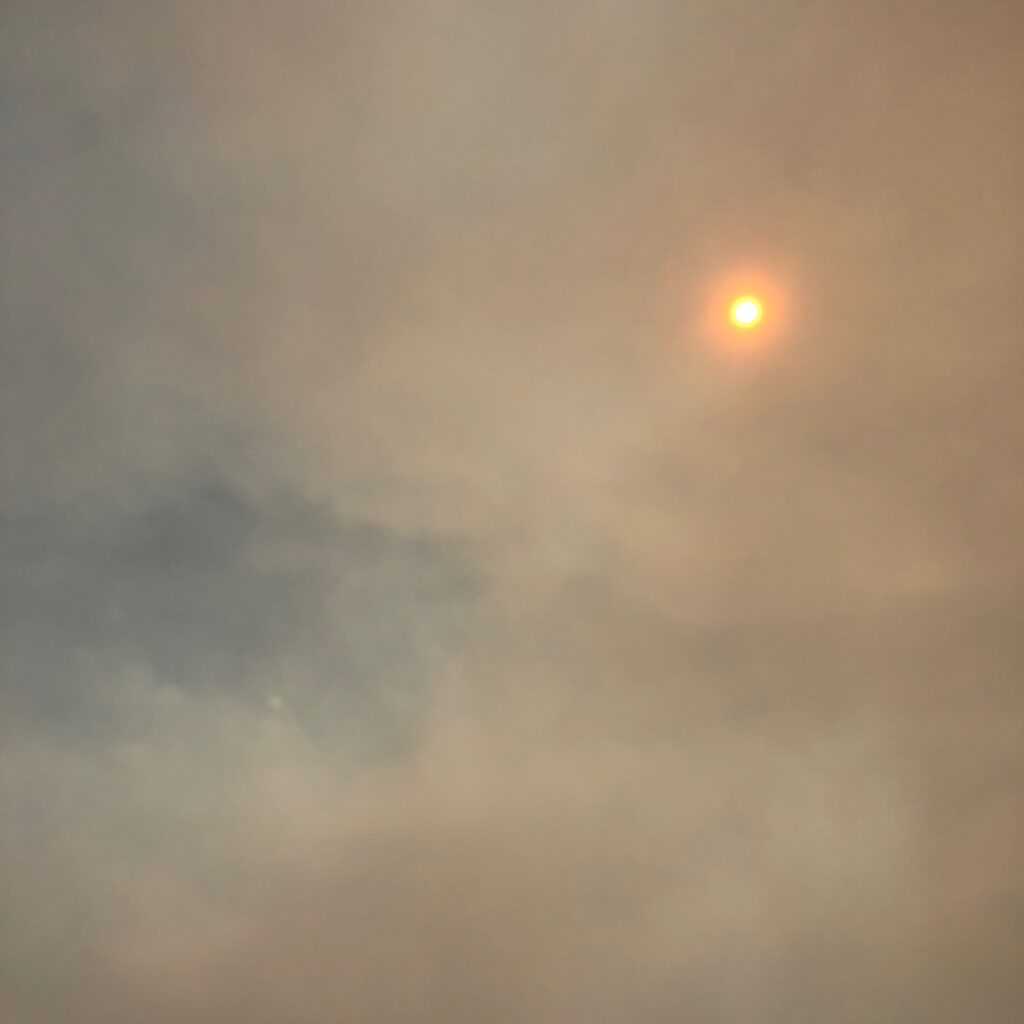
The code mandates continuous mechanical ventilation and filtration, but it does not address air leakage. Title 24 includes one page that states “air seal everything”, and calls it a day.
A building can be fully compliant and still be poorly prepared for a smoke emergency. With the compliance loopholes listed above, and zero accountability mandated on site, the field is wide open for smoke and pollution to fill brand new buildings and impact occupants.
This is why smoke tightness should be a central topic for every California architect and developer, even though the code barely treats it that way. Smoke resilience is not a niche concern. It is a core performance issue. If the enclosure leaks and the ventilation strategy is rigid, outdoor smoke becomes indoor exposure.
Real smoke resilience in California demands more than compliance ventilation. It demands a tight building envelope to go alongside the high-quality filtration already in place in Title 24.It also demands thinking beyond energy model tradeoffs. A project should not be able to compensate for a weak enclosure and poor filtration with more mechanical equipment or PV panels.
California is Dragging, not Leading
Other places are moving faster than California on to improve the quality of the building stock.
- Massachusetts requires full Passive House certification for multifamily buildings over 12,000 square feet.
- New York City’s 2025 code mandates air leakage testing for nearly all commercial buildings and requires thermal bridge mitigation.
California, by contrast, still spends remarkable attention on details like pet door leakage (≤ 0.3 cfm/ft2 at 75 Pa, by the way), while staying weak on whole-building airtightness and smoke-ready operation.
The contrast is embarrassing. California has progressive branding, but in this area the code still lags where it matters most: protecting actual occupants during actual emergencies.

The Path Forward for Smart Builders
The right way to read Title 24 is as a legal floor, not a design ceiling. That mindset is crucial.
If you are an architect, builder, developer, or enclosure consultant in California, the lesson is simple: do not confuse code approval with high performance. The newest Title 24 may help the state with carbon accounting and grid planning, but it does not reliably deliver durable, healthy, resilient buildings. It is not remotely equivalent to Passive House, and it should stop being discussed as if it were.
Smart teams need to go further. That means using blower door testing to verify the quality of the air barrier, instead of trusting visual inspection alone. It means testing whole buildings, not just checking product sheets. It means designing ventilation around filtration, comfort, and smoke events, not just compliance math. It means installing ERV/HRVs fresh air system to provide occupants with a continuous supply of filtered fresh air. It means treating airtightness, thermal continuity, and IAQ as core design priorities from day one.
The long life of the Kranichstein Passive House envelope shows what durable design can achieve. After 25 years, that enclosure was still performing well. That is the benchmark California should be chasing: buildings that work for decades, not just buildings that pass a report today.
The builders and architects who understand this will lead the next phase of high-performance construction in California. Everyone else will keep passing code while missing the point.
California Title 24 FAQ
What is the main problem with Title 24 airtightness rules?
The main problem is inconsistency. Multifamily projects face strict testing, while many single-family and commercial projects can avoid physical verification and rely on defaults, paperwork, or visual inspection. This causes great concern around indoor air quality for buildings in California.
What is Title 24 compartmentalization testing?
Title 24 compartmentalization testing is a required diagnostic test for attached dwelling units that measures leakage between units and adjacent spaces. It uses a hard threshold of 0.3 cfm per square foot at 50 Pa and must be uploaded to the compliance registry.
Is multifamily compartmentalization testing the same as good enclosure design?
No. Multifamily compartmentalization testing measures whether a project hits a target on test day. It does not guarantee that the air barrier was designed and built in a durable, resilient way.
Does Title 24 require blower door testing for all buildings?
No. The Title 24 blower door test requirement is strict for attached multifamily units, but many single-family homes and most commercial buildings can avoid whole-building testing through other compliance paths.
Why is blower door testing important in California?
A blower door test reveals actual leakage in the finished building. Without testing, teams may miss major air barrier failures that affect comfort, durability, energy use, and smoke protection. In other words, the blower door test result is one indicator of the level of indoor air quality one can expect from a building, even in California.
What does Title 24 miss on air quality?
Title 24 focuses heavily on ventilation rates and equipment pathways, but they do entirely miss the role of building air tightness for indoor air quality. This severely impacts the indoor air quality inside buildings in California.
Why is California indoor air quality (IAQ) tied to airtightness?
Indoor air quality depends on controlling where air enters, how it is filtered, and how it is delivered. A leaky enclosure makes that much harder, especially during wildfire season. IAQ in California buildings will remain low until stringent air tightness measures are included in Title 24.
What does smoke resilience require for California buildings?
Real smoke resilience requires a tight envelope, filtered ventilation, and the ability to reduce or stop hazardous outdoor air intake during wildfire smoke events.
What should California professionals do beyond code?
Treat Title 24 as a minimum standard. Use verified air barriers, better filtration, whole-building blower door testing even pre-drywall, and ventilation systems designed for durability, comfort, and resilience.
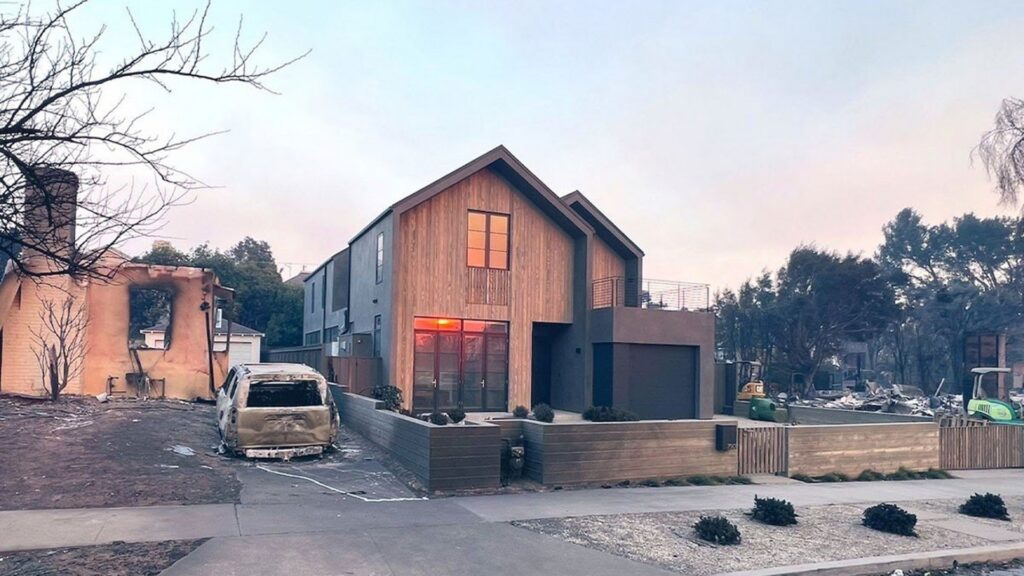
The featured image by Greg Chasen (@ChasenGreg/X), the architect who designed the fire-resilient residence
2 comments
Comments are closed.
First is my pet peeve: Title 24 of the California Code of Regulations is the Building Standards Code. It includes egress, plumbing, “WUI” construction and yes the infamous CA Energy Code (which is Part 6 of Title 24). Not sure we want to say “Title-24 is compete shit”
Second: It is a funny path to how the code gets made and what gets into the code. Scrubbing my brain and memory, I feel like the compartmentalization in multi-family comes from issues of third hand smoke (not to mention some people don’t like the smell of their neighbors fish). So it doesn’t so much have to do with the envelope. But does relate back to you main issue – the purpose and focus is not on occupant comfort and health. CA Energy Commission about focusing on “long term system cost”.
Third: I find it very peculiar that people have suddenly gotten worried about wildfire smoke. I guess they or none of their friends live near a port that used to run unregulated diesel engines, down wind of a concrete batch plant, in CA central valley with tilling of fertilizer and pesticide laden fields. I get that “wildfire smoke” is visceral having woken up to “orange sky day”. Here in SF Bay Area we didn’t see a wildfire smoke event at all in 2024 but there are many populations suffering from daily pollution. So we should keep with the theme of DAILY benefits of envelope tightness and filtered ventilation.
I completely understand your first point. I don’t have the knowledge to comment on parts of the Title 24 Code you mentioned – plummbing, WUI, etc..
To the extent of my professional knowledge, Part 6 of Title 24 (“Building Energy Efficiency”) is really disappointing. It assumes the building envelope is bad, and that the mechanical systems will come to save the day. In my opinin, that’s very backward, and it’s a recipe for failure when the grid is down or when the mechanical systems fail (*when*, not if). With its fame to be such a stringent Code, it’s amazing to see how far behind Title 24 is compared to e.g. the new Energy Code in NYC (2025 NYCECC), or the Massachusetts Energy Code.
Your second point helps me understand the compartmentalization test better, thank you for your insight.