The Passive House Hotel Amenities You Can’t Photograph
 by Dilianny Espinoza - July 23, 2026
 No comments
What staying at America’s only Passive House hotel taught me about comfort.
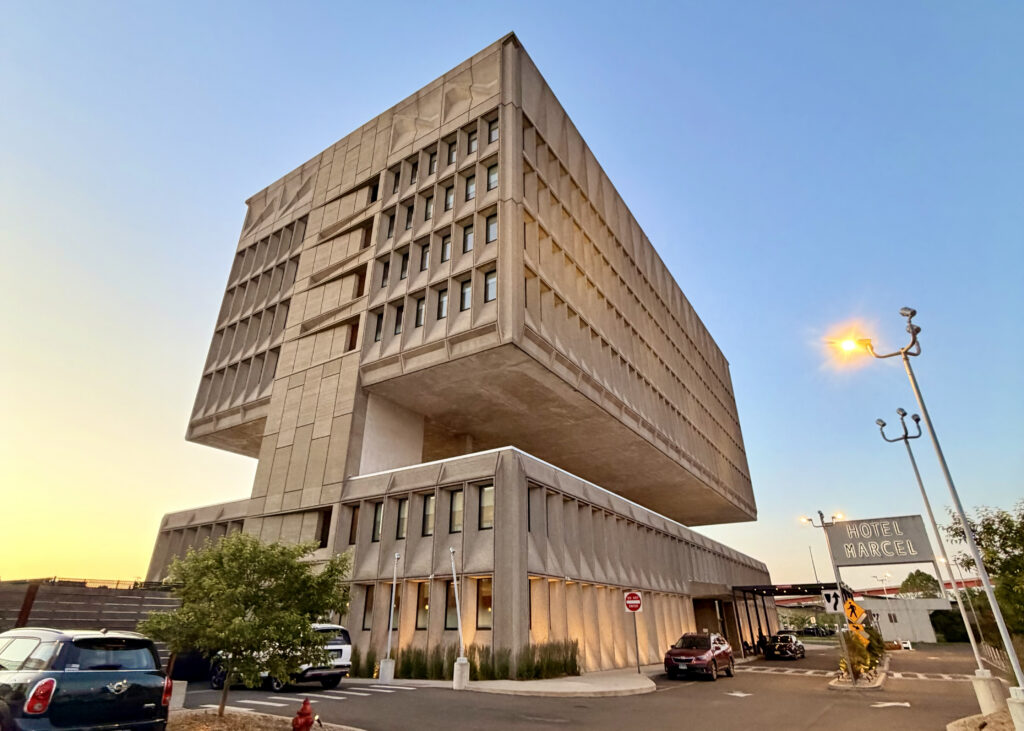
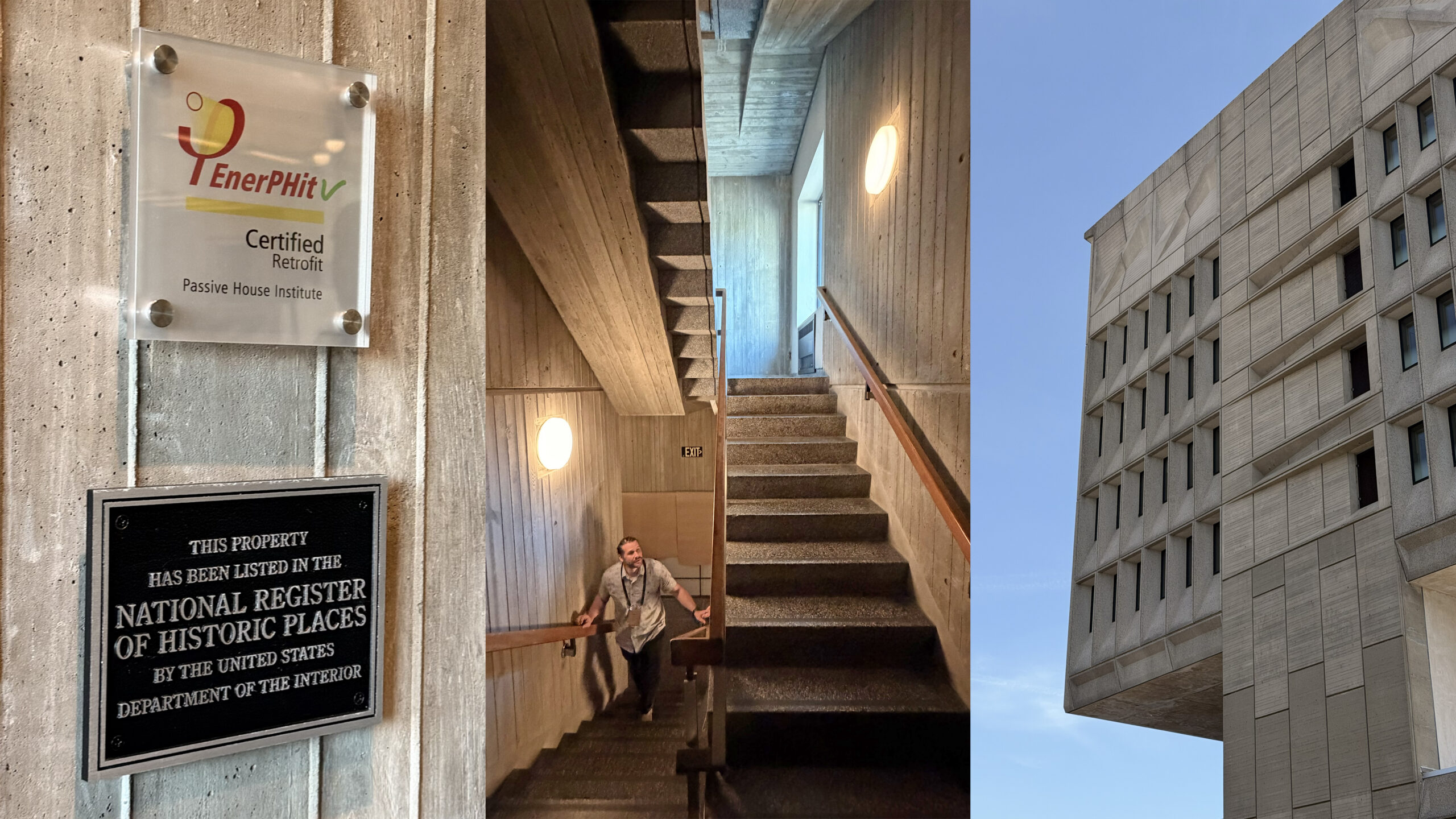
From Interstate 95, a massive concrete block quietly emerges above the New Haven skyline. For many people, it probably goes unnoticed. Others might glance at it and wonder what that monolithic piece of concrete is doing floating above the highway. I definitely belonged to the second group.
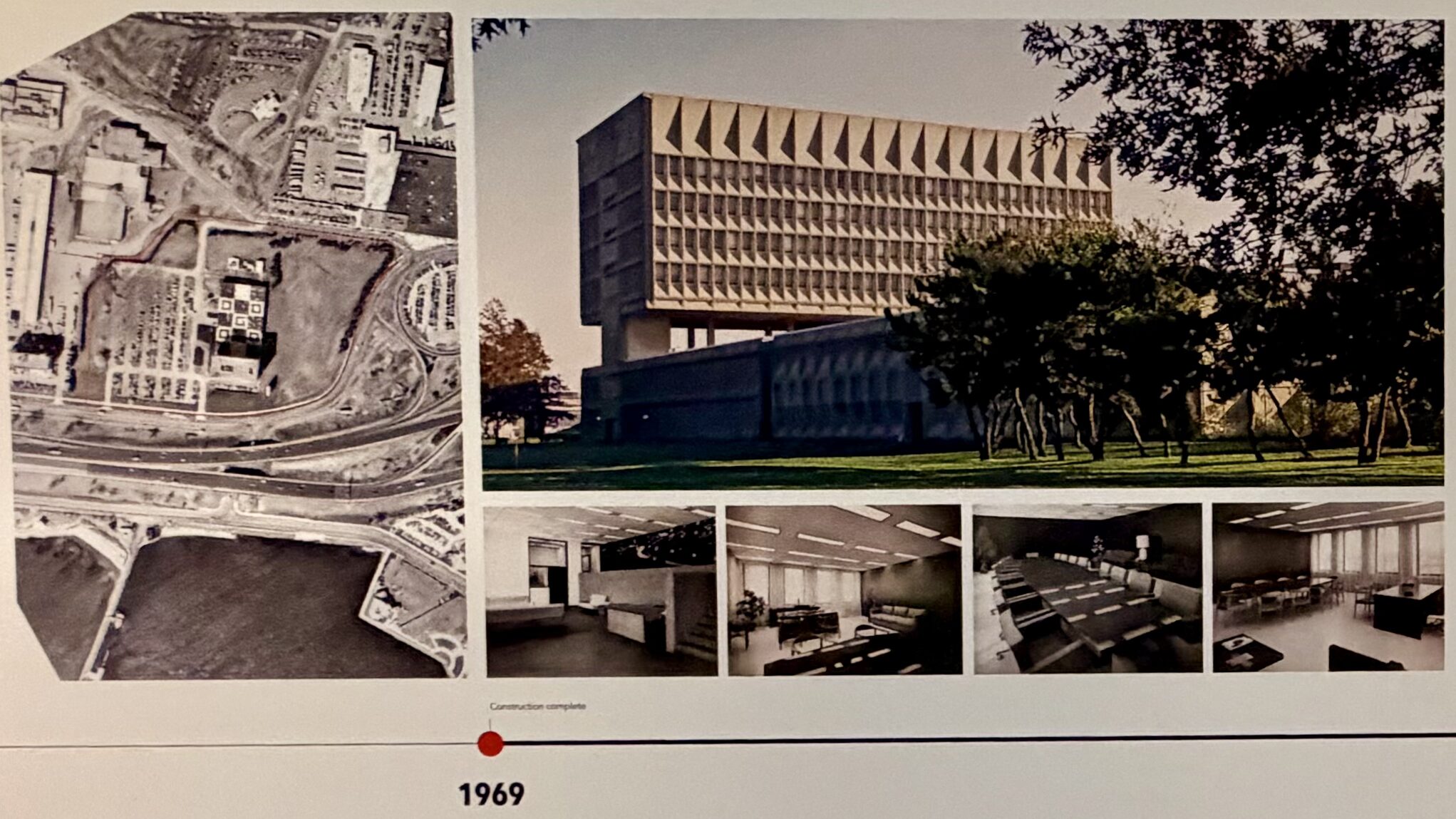
For years, the building was considered by many to be “Connecticut’s ugliest building.” Designed by renowned architect Marcel Breuer in 1969, its bold Brutalist architecture has always divided opinions. I can understand why. Its heavy concrete expression can feel intimidating, but architecture has taught me that some buildings simply refuse to be judged by photographs.
I arrived just before sunset, and everything changed. The building almost looked as if gravity had momentarily forgotten how it was supposed to work. The more I looked at it, the more I wondered: “Why is it divided like that?”
The answer had much more to do with function than aesthetics. Originally the lower levels housed research and production laboratories, while the upper volume contained administrative offices. Separating the two uses helped reduce machinery noise and vibration in the offices above. It’s one of those details that, once you know it, suddenly makes the entire building make sense.
And if you were wondering, like I was… no, the space between the two volumes isn’t a terrace. Because of the building’s historic designation, it cannot become one.
Before I had even checked in, Hotel Marcel had already started telling stories. By the time I checked out, I realized the amenities I’d remember most were the ones I couldn’t photograph.
A Building With Two Lives
Completed in 1969 as the headquarters for Armstrong Rubber Company, the building later became home to Pirelli before sitting vacant for years. It eventually found a completely different future through an ambitious adaptive reuse project that transformed it into a 165-room boutique hotel.
Today, Hotel Marcel carries several distinctions. It is the first Passive House-certified hotel in the United States, the nation’s first certified zero-emission hotel, and a LEED Platinum building. Instead of demolishing an iconic structure, the project demonstrates how one of the country’s most energy-intensive building types can be transformed into one of its most efficient. It simply became a better version of itself.
That’s also an important reminder that the biggest climate opportunity isn’t always in new construction. Most of the buildings that will exist in the coming decades have already been built, and their operational energy use remains one of our biggest challenges. Deep energy retrofits like Hotel Marcel show what’s possible. At the same time, the buildings we design today should aim for high-performance standards, not just minimum code requirements, so they don’t become tomorrow’s retrofit projects.
I Came Looking for Building Science
As an architect working in building science, I arrived exactly as you’d expect, I couldn’t stop inspecting everything.
I found myself studying the triple-pane windows, mentally tracing the continuity of the enclosure, looking for ventilation diffusers, and wondering where the mechanical systems were hidden. Every detail became another clue to how the building achieved the level of performance I’d heard so much about.
What I appreciated most was that none of those technical decisions came at the expense of the guest experience. Every layer, every system, every detail worked quietly in the background, allowing the building to do what a hotel is supposed to do.
Nobody books a hotel because they’re excited about airtightness or heat recovery ventilators. People simply want to sleep well, feel comfortable, enjoy a good meal, and wake up rested. Hotel Marcel quietly delivers all of those things without ever demanding your attention.
Behind the Curtain
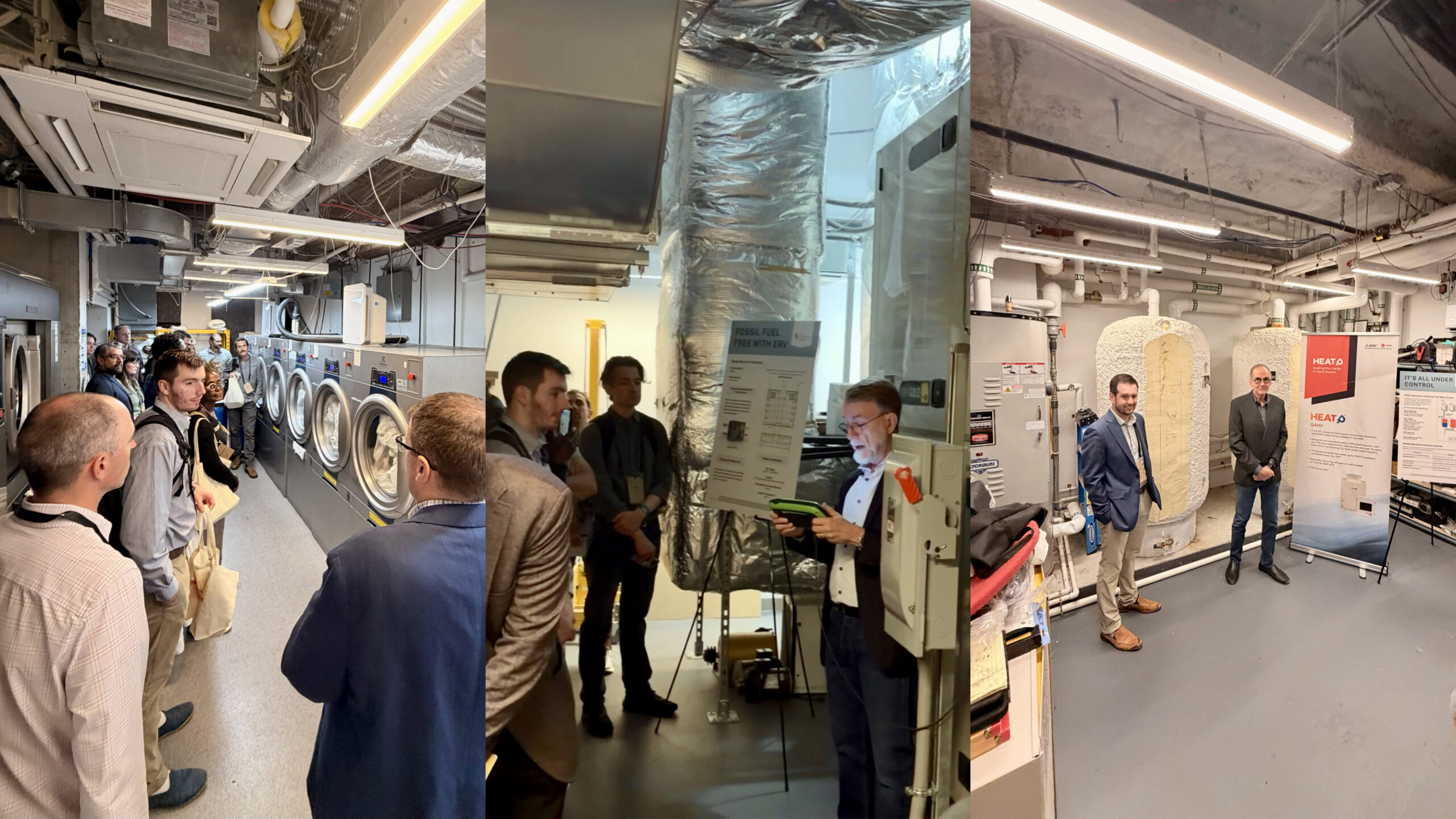
One of the highlights of my visit was the opportunity to tour the spaces most guests never see, thanks to the Passive House Network, who organized a behind-the-scenes visit with the Hotel Marcel team.
Our first stop was the all-electric kitchen, where even the menu has been thoughtfully designed around induction cooking and electric equipment. The food was honestly excellent, proving that electrification doesn’t mean compromising quality, it simply becomes part of the experience.
Next came the laundry facilities, where high-speed extraction washers paired with an ozone system dramatically reduce the need for hot water during each cycle. It’s one of those details most guests will never think about, but in a hotel processing thousands of towels and sheets every week, the savings quickly add up.
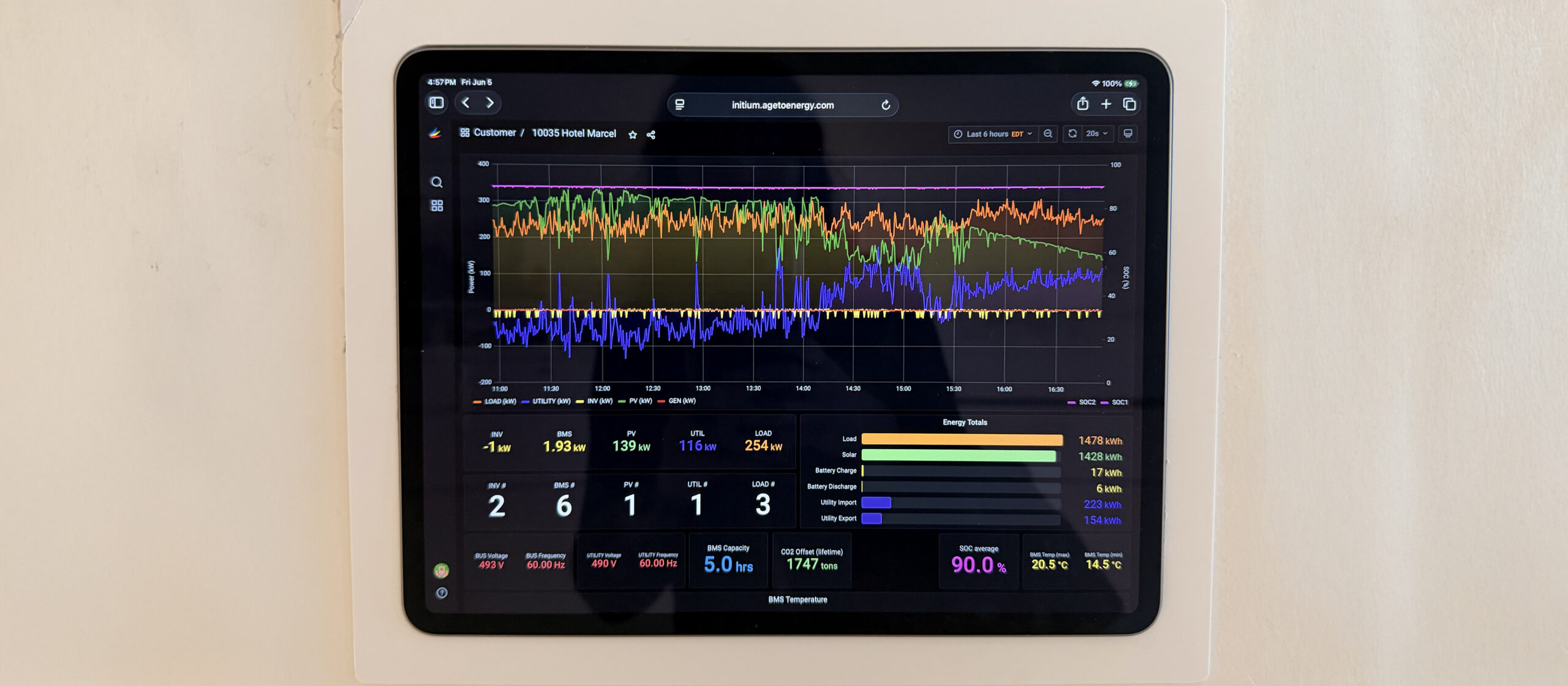
Then we stepped into the building’s mechanical spaces. We toured the ventilation systems, domestic hot water equipment, and the building controls that quietly keep Hotel Marcel operating every day. The hotel runs entirely without fossil fuels. Heating, cooling, ventilation, and domestic hot water are all electric, supported by Mitsubishi VRF heat pumps, CO₂ heat pump water heaters, energy recovery ventilators, and an advanced building management system that continuously monitors performance.
Standing in those rooms, surrounded by pipes, ducts, sensors, and equipment, it was easy to appreciate how much coordination happens behind the scenes to create something that feels effortless.
None of these spaces are designed to impress hotel guests. They’re designed so guests never have to think about them.
The Highway That Disappeared
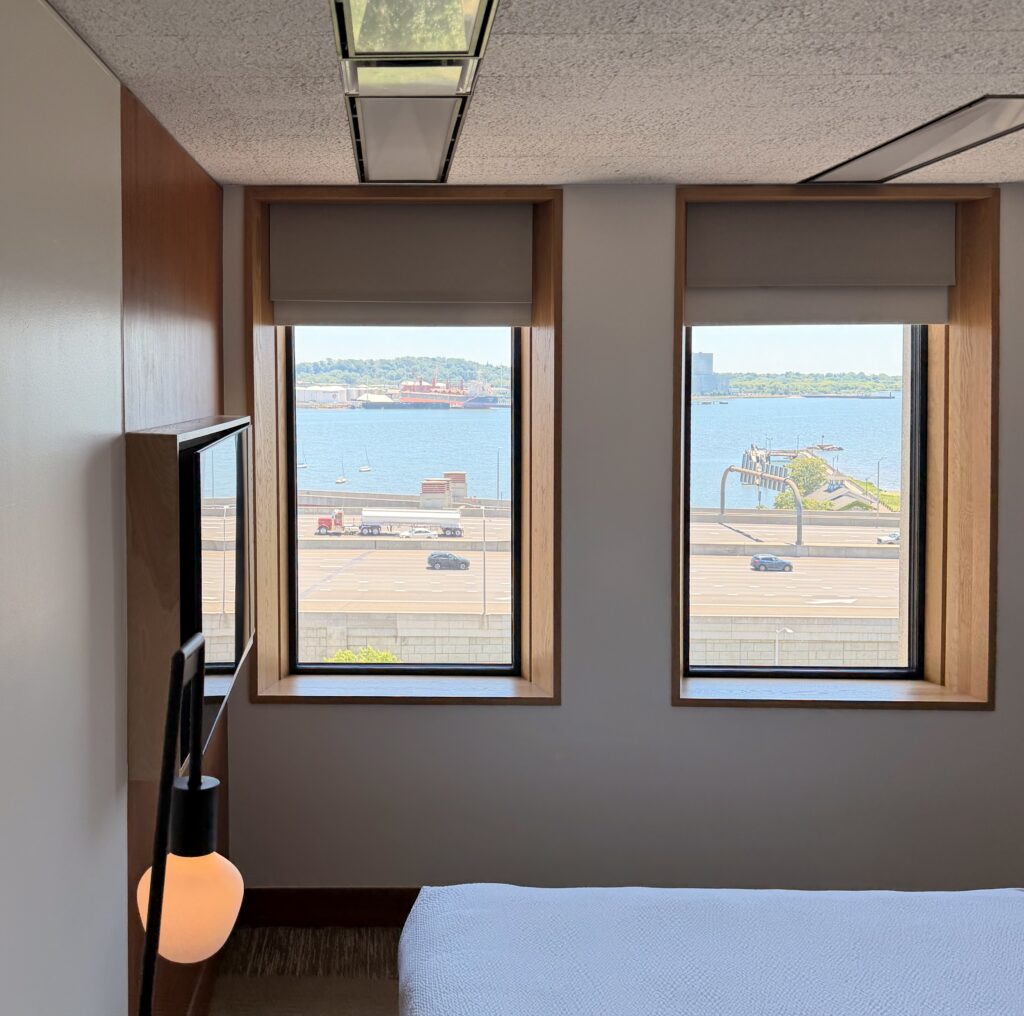
One of the most impressive moments of the tour was when we entered one of the suites and walked toward the window. Right in front of us, only a few feet away, was Interstate 95. One of the busiest highways on the East Coast. I watched an entire caravan of tractor trailers drive past the hotel.
The sound? Absolutely nothing. Not “less noise.” Not “pretty quiet.” Nothing.
Honestly, I was expecting good soundproofing, but this was on another level. It might be one of the most underrated benefits of Passive House design, especially for hotels. Most people associate Passive House with lower energy bills, but if you ask me, silence is a valuable luxury.
Imagine any conventional hotel built this close to I-95. It would probably be flooded with reviews complaining about traffic noise. Hotel Marcel somehow turns one of its biggest disadvantages into one of its greatest strengths.
Later during the technical tour, it all made sense. The EnerPHit-certified building envelope combines continuous insulation, exceptional airtightness, and triple-pane argon-filled windows. Together they don’t just reduce heat loss; they create an acoustic barrier that almost disconnects the interior from the city outside.
The Best Nights of Sleep I Can Remember
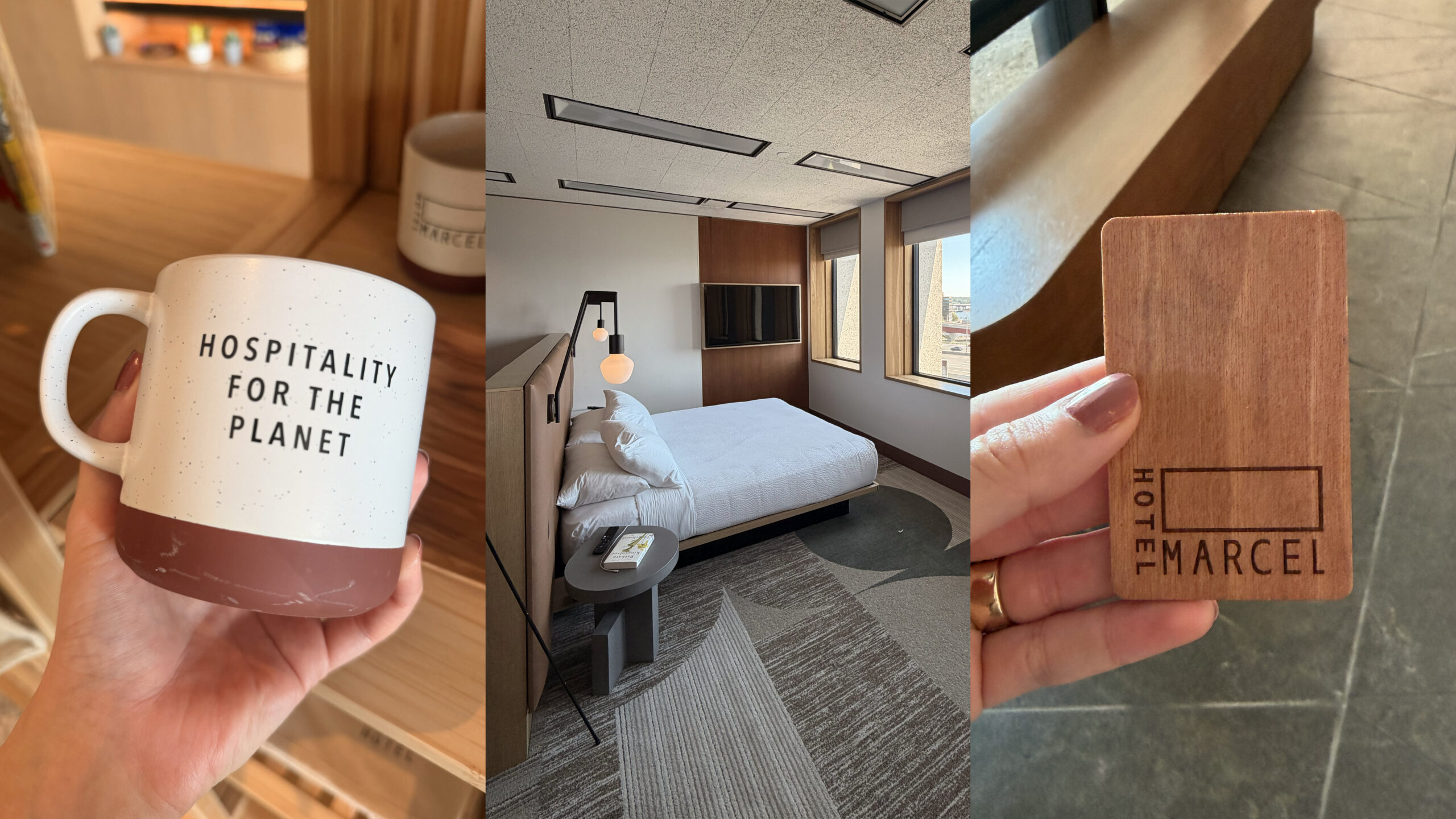
That evening I closed the blackout curtains, got into bed and fell asleep almost immediately.
The next thing I remember was opening my eyes. It was already eight in the morning. I honestly couldn’t believe it. I probably had one of the most uninterrupted nights of sleep I’ve ever had in a hotel.
There were no random drafts blowing across the bed. I never woke up because the room had become too warm or too cold. I didn’t reach for the thermostat once, and I definitely wasn’t searching for an extra blanket in the middle of the night. There were no mysterious mechanical sounds, no traffic noise, nothing.
Just sleep.
One thing is learning about Passive House in a classroom. Another is experiencing it.
Building science research continues to show how indoor air quality, stable temperatures and low CO₂ concentrations influence our sleep quality. Hotel Marcel continuously supplies filtered fresh air through balanced energy recovery ventilation while maintaining remarkably stable indoor temperatures. The building never demands your attention because it’s constantly working in the background.
Maybe that’s why I slept so well. Or maybe that’s simply what comfort is supposed to feel like.
The Thermostat That I Forgot Existed
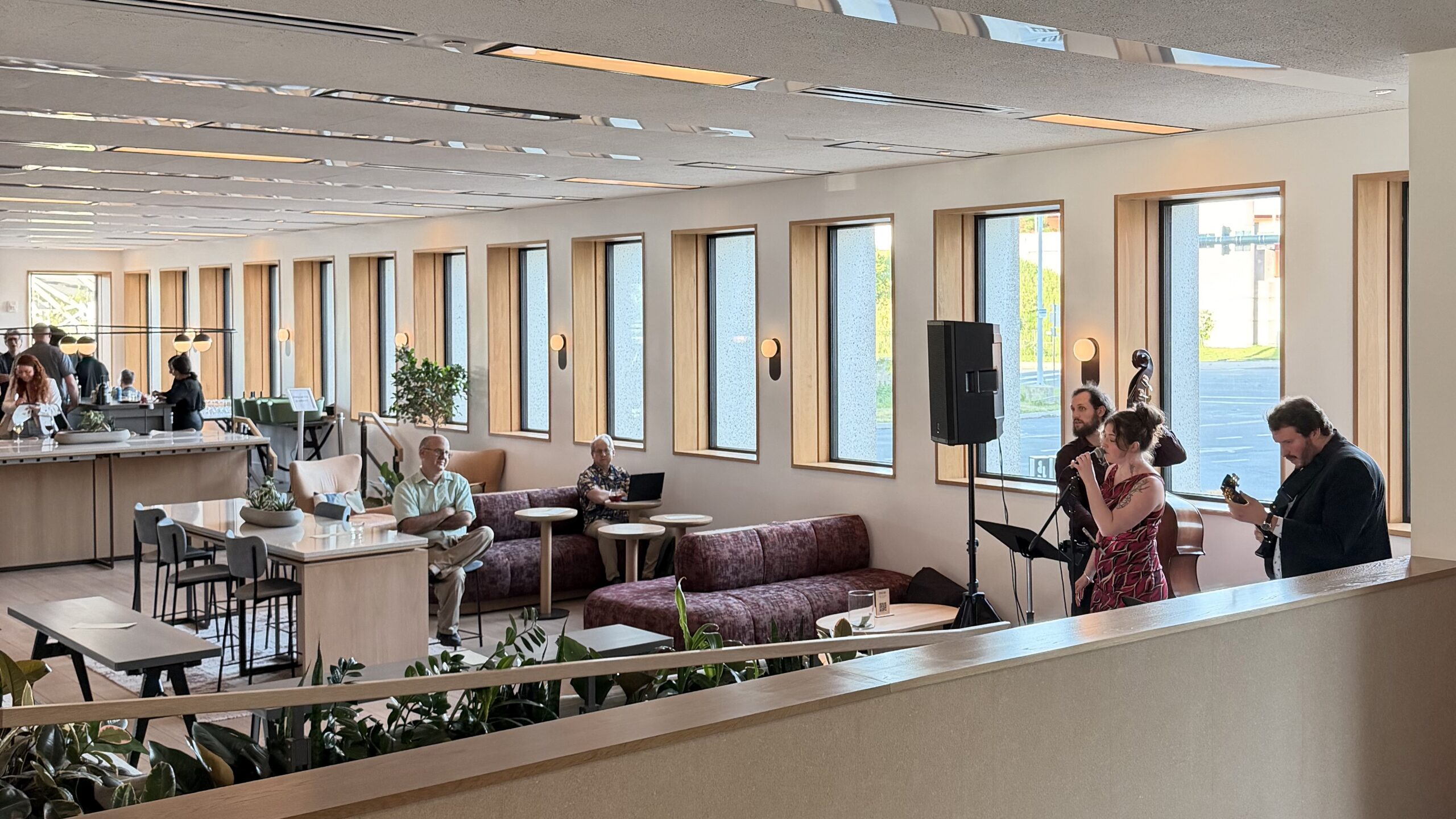
Another moment that stayed with me happened the next morning while I was working in the lobby and later stepped into the conference room.
If you’ve attended enough conferences, you probably know the routine. At some point, somebody starts looking for a sweater because the air conditioning is blasting at full speed while someone else is secretly wishing they could turn the thermostat down.
At one conference I attended recently in spring, I literally had to retrieve my coat from the coat check because the room was even colder than the weather outside. The woman at the coat check smiled and told me many people had done the same.
Hotel Marcel felt completely different. The temperature was simply… right. Not cold. Not warm. Just comfortable.
Passive House buildings don’t need to aggressively chase temperature all day long. Their highly insulated, airtight envelopes drastically reduce heating and cooling demand before the HVAC systems even begin working. In Hotel Marcel, balanced ventilation conditions the fresh air while the heat pumps simply fine-tune each guest room according to individual preferences.
Eventually you stop thinking about the thermostat altogether. And maybe that’s another invisible luxury.
One Night Isn’t Enough
The part that still surprises me the most isn’t the engineering. It isn’t the certifications. It isn’t even the fact that the building was transformed from one of Connecticut’s most debated pieces of architecture into one of the country’s highest-performing hotels. It’s the fact that, in 2026, Hotel Marcel is still the only certified Passive House hotel in the United States.
That feels almost impossible.
Because after spending just the first night there, I kept wondering what would happen if more people had the opportunity to experience this kind of comfort for themselves. Not through a lecture, a webinar or a building science article, but simply by checking into a hotel for the night.
Maybe then we’d stop thinking of Passive House as just another energy standard. Maybe we’d start recognizing it for what it actually delivers. A quieter room. Cleaner air. A stable temperature. A deeper night’s sleep.
The kinds of hotel amenities you can’t photograph. And somehow, those ended up being the ones I remembered the most.
Comments are closed.