
Are You Ignoring the Biggest Thermal Bridge in Your Building?
 by Enrico Bonilauri - May 25, 2023
 No comments
American construction is currently undergoing a massive and necessary transformation. Builders, architects, and developers are rapidly adopting continuous exterior insulation to meet stricter energy codes and higher performance standards. We insulate our walls better than ever before, wrap our buildings in high-tech weather barriers, and obsess over sealing every tiny crack.
Yet, amidst all this progress, the industry suffers from a massive blind spot. Project teams will spend hours agonizing over minor heat loss caused by a few extra wood studs in a wall assembly. Then, those same teams will turn around and approve a continuous strip of highly conductive aluminum cutting straight through their expensive exterior insulation.
This oversight is costing us dearly. A standard sheet metal flashing detail is perhaps the most overlooked cause of thermal bridging in high-performance construction in America today.
If you want your buildings to actually perform as designed, you must understand why this happens. Let us explore the mechanics behind this massive energy leak, the sheer scale of the problem across different projects, and how to fix it using better materials.
The Rise of Exterior Insulation in America
For decades, American builders relied almost entirely on cavity insulation—stuffing fiberglass batts between wood studs. Building science eventually proved that this method leaves buildings highly vulnerable to energy loss. Every single wood stud acts as a small bridge for heat to escape.
To combat this, the industry embraced the concept of the perfect thermal envelope. By wrapping the entire building structure in rigid foam or mineral wool, you drastically improve energy efficiency and indoor comfort.
However, moving insulation to the exterior means we have to rethink how we manage water. When water gets behind cladding, it needs a way to drain out safely. The traditional solution has always been to insert a piece of metal flashing to kick the water away from the wall. Unfortunately, bringing this old habit into modern wall assemblies creates a massive building science flaw.
The Most Overlooked Thermal Bridge
A thermal bridge occurs when a highly conductive material bypasses a building’s thermal insulation layer. Heat always seeks the path of least resistance. When a conductive material slices through your insulation, it acts like a superhighway for heat to escape your building during the winter and enter during the summer.
When you look for a textbook thermal bridge example, you do not need to look much further than standard sheet metal. Aluminum, copper, and stainless steel are incredible conductors of heat. Even though the metal used for flashing is very thin, its high conductivity means it easily pulls heat straight through the wall.
Think about a gaping, one-inch hole running the entire length of your exterior insulation. Most construction professionals would immediately halt a project to fix such an obvious defect. However, a continuous strip of highly conductive metal does exactly the same thing to your energy performance. This makes the standard metal flashing example the worst offender for breaking a modern high performance building envelopes.
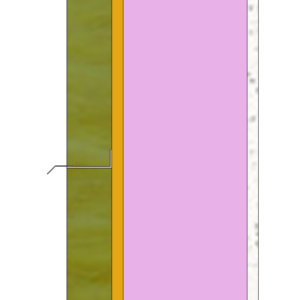
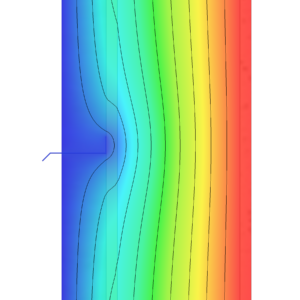
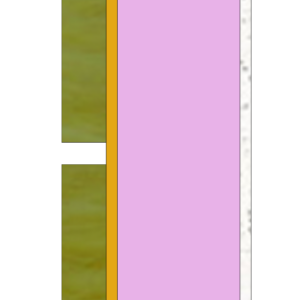
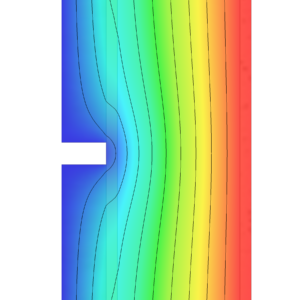
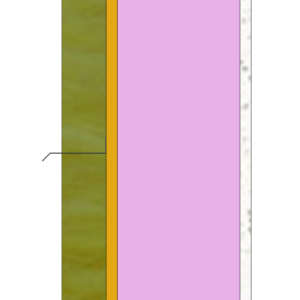
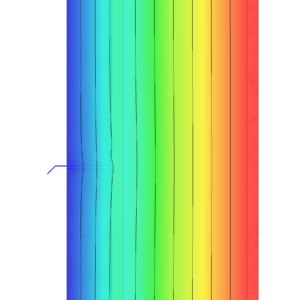
For comparison, we modeled the thermal bridging caused by leaving an empty gap between the boards of the exterior continuous insulation. From a thermal bridging perspective, we found that the metal flashing detail shown above causes as big a thermal bridge as a 1-inch wide empty gap between the insulation boards.
Thermal Bridging: Mice and Elephants
The American high-performance building sector has a strange double standard. We heavily scrutinize the thermal bridging caused by standard wood framing. Teams will redesign entire structural layouts to eliminate a few extra two-by-fours, adopting advanced framing techniques just to save a fraction of an R-value.
Wood, however, is a relatively poor conductor of heat. While wood studs do cause some thermal bridging, their impact is minimal compared to metal. In other words, in the realm of thermal bridging, wood studs are but little mice compared to the thermal bridging elephants of metal, concrete, and masonry.
On the other hand, the standard metal flashing details often get a free pass with project teams. Installers routinely slide aluminum flashing all the way back to the structural sheathing, cutting completely through the continuous exterior insulation. Because we are so focused on mitigating minor heat loss from wood framing, we completely ignore the massive thermal bridging detail right in front of us. We solve a minor issue while installing a massive energy leak by default.
The Scale of the Problem: Thousands of Linear Feet
You might think a thin piece of metal cannot possibly cause that much energy loss. This assumption ignores the sheer scale of modern construction. We are not just talking about a single piece of flashing over one single exterior door.
In a standard single-family residential build, you might have several hundred linear feet of flashing above windows, doors, and floor transitions. If every single foot of that flashing slices through your insulation, the cumulative heat loss is staggering.
When you scale this up to a large commercial facility or a multi-family deep energy retrofit, the problem multiplies exponentially. These larger projects often feature thousands of linear feet of exterior flashing. When you apply a highly conductive thermal bridging example across thousands of feet, the energy loss forces the building’s mechanical systems to work continuously just to maintain a baseline temperature.
The Consequences: Performance Gaps and Mold
Ignoring a massive thermal bridge detail leads directly to what building scientists call the “performance gap.” This gap represents the stark difference between how a building is modeled to perform on paper and how it actually uses energy in the real world. Performance gap is a particularly sticky point when it comes to high-performance projects, and building electrification (read how Passive House can help you prevent it).
When energy models fail to properly account for the immense heat loss caused by a metal flashing example, the building consumes far more electricity or gas than predicted. This drains the owner’s wallet and puts unnecessary strain on the grid.
Beyond energy loss, this detailing creates serious health and durability risks. When heat escapes through the metal during cold weather, the interior surfaces directly behind the flashing drop in temperature. Warm, moist indoor air hits these cold spots, causing hidden condensation inside your walls. Over time, this continuous condensation creates the perfect breeding ground for toxic mold and structural rot.
Even if you’re not seeking building certification per se, Passive House Hygiene criterion can help you tackle this issue, and prevent the risk of mold and condensation caused by thermal bridging.
Better Solutions: Exterior Insulation Flashing
Fortunately, you do not have to choose between a waterproof building and an energy-efficient one. You can achieve effective bulk water management without destroying your carefully designed thermal envelope.
The solution lies in adopting proper exterior insulation flashing techniques. Instead of relying on highly conductive sheet metal that penetrates the entire wall assembly, project teams must substitute non-metal alternatives.
By utilizing rigid fiberglass components, specialized high-density plastics, or high-performance flashing tapes, you can direct bulk water safely away from the wall cavity. These materials provide effective drainage while possessing a fraction of the thermal conductivity of aluminum or steel.
When you specify non-metal continuous insulation flashing, you maintain the full integrity of the exterior insulation. You keep the interior surfaces warm, prevent hidden condensation, and completely eliminate the most overlooked thermal bridge in the country. Start demanding better details on your projects, and stop letting old habits ruin modern building performance.
-> Learn to Master Advanced Building Science <-
Metal Flashing Thermal Bridging – FAQ
What is a clear thermal bridge example in modern construction?
A common thermal bridge example is a metal through-wall flashing detail. Because metal conducts heat rapidly, it pulls heat directly through the building’s exterior insulation layer, acting just like a physical gap in the thermal envelope.
Why is a standard metal flashing detail problematic for energy efficiency?
A standard metal flashing detail creates a continuous thermal bridge along the exterior of a building. The metal conducts heat easily, bypassing the exterior insulation and causing significant energy loss, which dramatically increases heating and cooling demands.
Why is the metal flashing example considered the most overlooked issue?
Builders often focus heavily on mitigating minor thermal bridging from wood framing but ignore metal flashing. A metal flashing example is critical because a single project can contain thousands of linear feet of this highly conductive material, causing massive, unmodeled energy loss.
How does a poor thermal bridging detail cause mold?
A thermal bridging detail allows heat to escape, making adjacent interior wall surfaces extremely cold. When warm, humid indoor air meets these cold interior surfaces, condensation forms. This trapped moisture eventually leads to toxic mold growth and structural rot.
What is continuous insulation flashing?
Continuous insulation flashing involves using non-conductive materials—such as specialized membranes, rigid plastics, or fiberglass—to provide water drainage without breaking the building’s thermal envelope.
How does exterior insulation flashing improve building performance?
By using non-metal exterior insulation flashing, project teams ensure that water drains safely away from the wall assembly without creating a highly conductive thermal bridge. This preserves the building’s energy efficiency and prevents the dreaded performance gap.
Comments are closed.