California Moves Toward Passive House Compliance with AB 368

California AB 368 Passive House Compliance Could Transform Building Efficiency Standards

On May 30, the passing of California AB368 Bill marks a significant milestone for the adoption of Passive House in the State, and across the Country.

In a major move toward improving building performance and reducing carbon emissions, California Assembly member Chris Ward has introduced AB 368—a bill focused on advancing California AB 368 Passive House compliance. This legislation tasks the California Energy Commission (CEC) with evaluating Passive House standards as a potential alternative pathway to the state’s Title 24 energy code.

What Is California AB 368 Passive House Compliance?

California AB 368 Passive House compliance refers to the potential approval of Passive House standards as an alternative method to meet California’s building efficiency requirements under Title 24. If adopted, this could give architects, builders, and developers more flexibility in achieving energy efficiency goals through a performance-based framework rather than prescriptive measures.

Why It Matters for California

This push for California AB 368 Passive House compliance comes at a time when the state is grappling with severe climate challenges—including wildfires, extreme heat, and water shortages. Passive House buildings are inherently more resilient, healthy, and energy-efficient, making them a strategic asset in addressing both environmental and public health goals.

The bill is sponsored by Climate Action California, an organization advocating for bold climate solutions. Its introduction reflects a growing recognition that traditional building codes may need to evolve to support deeper energy savings and long-term climate strategies.

How Did We Get Here?

The Climate Action California organization has lead the charge in promoting the AB368 Bill to make Passive House compliance a reality for California. Emu, Passive House California, and other likeminded organizations have supported the bill.

Looking Ahead

If adopted, California AB 368 Passive House compliance could pave the way for more sustainable construction practices across the state. By integrating Passive House design into the regulatory framework, California has an opportunity to lead the nation in energy-efficient building innovation—while offering residents safer, healthier, and more climate-resilient homes.

Passive House In California – Learn More

Passive House in California

Join us on June 17 at 12pm PT for a free presentation on why Passive House matters for the California unique conditions.

Find out what other free building science presentations we have planned over the Summer, including a panel discussion with Passive House builders on September 9.

Get Ready: Summer Building Science Presentations Are Here!

Emu’s Summer Presentations Calendar

Join us this Summer for a great series of free in-depth webinars and in-person social events. Deepen your knowledge of building science and Passive House and building science, and network with other professionals across the U.S.

For each presentation, you can find more details on Emu’s Free Presentations page.

We look forward to seeing you there!


Presentation: Passive House in California

Passive House In California

Format: webinar.

June 17, 12pm PT – REGISTER HERE

Presentation: Dude, Where’s My Carbon (case study on embodied carbon and Passive House)

Embodied Carbon And Passive House

This is an event in collaboration with Passive House Rocky Mountains.

Format: webinar.

June 18, 12pm MT – REGISTER HERE

Presentation: Deeper, Healthier Electrification: Passive House Retrofits

Passive House Retrofits

This is a presentation in collaboration with the Denver chapter of the Colorado Renewable Energy Society (MD CRES).

Format: ONLINE (previously planned to be in-person)

June 19, 6:30pm MT – REGISTER HERE

Tour Of The Denver Passive Pod Workshop

Passive House hands-on Training

This is tour of Emu’s Passive Pod Workshop in Denver (Arvada), in collaboration with the Colorado Green Building Guild (CGBG). The number of participants is capped at 15, and registration is required. More info on CGBG’s website.

Format: in-person tour.

June 25, 12pm MT – this is an invite-only event, please apply below.

APPLY  HERE


Denver Passive House Social Event

June 2025 Denver Passive House Social Event

This is the in-person social event associated with the June Boot Camp in Denver.

Format: in-person social event.

June 23, 3-6pm MT – REGISTER HERE

Presentation: Passive House Strategies in Warm, Hot, and Humid Climates

Passive House in Warm, Hot, and Humid Climates

Format: webinar.

July 15, 12pm PT – REGISTER HERE

Presentation: Passive House As An Indoor Air Quality Strategy

Passive House Indoor Air Quality

Format: webinar.

August 20, 12pm PT – REGISTER HERE

Presentation: The Cornerstones Of Thermal Comfort: High Performance Windows

Thermal Comfort High Performance Windows

This is an event in collaboration with BS&Beer Salt Lake City.

Format: webinar.

August 27, 6pm MT – REGISTER HERE

Panel Discussion: Building The Future – High Performance Construction in California

Passive House Builder In California

Format: online panel discussion.

September 9 – date to be confirmed – [registration opening soon]

Passive House Continuing Education Credits Through Summer BS Presentations

If you are a Certified Passive House Consultant, Designer, or Tradesperson (CPHC, CPHD, or CPHT), attending these presentations may get you continuing education credits. This will help you renew your Passive House certification.

As some of these presentations are entirely new, the continuing education credits may still be pending. In case, please reach out to us to verifty if specific presentations or events are already approved.

Emu Alumni Open Office Hours, And Free Info Sessions

Through the Summer, we’ll also continue the regular schedule of for open mic Zoom calls:

  • Free Info Sessions (typically every 1st Thursday of the month). These Zoom calls that are open for anyone that is interested in learning more about Passive House and building science. The Zoom link is in the calendar event in Emu’s public calendar.
  • Emu Alumni Open Office Hours (typically every 3rd Thursday of the month). These Zoom calls are reserved for Emu Alumni to come in and ask questions, go over their project details, or just listen in and meet other Alumni. Attending these presentations grants 1 CEU to renew the professional certification with PHI. The Zoom link is in the Emu student dashboard.

Big Win for Passive House: Washington State Passes HB 1183

HB 1183: A Key Step for Passive House in Washington

Washington State has recently passed HB 1183, a landmark bill aimed at supporting Passive House construction. This bill addresses major challenges in building energy-efficient homes by reducing barriers in local zoning and building codes. By making it easier to implement Passive House standards, Washington is paving the way for more affordable and sustainable housing.

With HB 1183, Washington becomes a leader in promoting green building practices and energy-efficient homes. These homes, built to Passive House standards, use up to 90% less energy for heating and cooling. As a result, they provide significant savings on utility bills while helping reduce carbon emissions statewide.

Washington State HB1183 Promoting Passive House

Key Features of HB 1183 for Passive House Construction

HB 1183 includes several important revisions that make it easier and more affordable to build Passive House projects. By addressing obstacles such as building height limits and setback requirements, the bill supports energy-efficient designs. Additionally, it helps developers and architects streamline their projects.

The changes are essential for making Passive House construction feasible in urban areas. They simplify the design process and reduce unnecessary costs, which makes it easier to prioritize energy performance without sacrificing affordable housing goals.

Key Changes in HB 1183

HB 1183 introduces several major changes to building regulations, aimed at supporting Passive House development:

  • Wall Projections: Insulated walls can now extend 8 inches into setbacks, even for non-conforming buildings.
  • Roof Height Increases: Buildings can exceed height limits by 8 inches to accommodate insulation; 4 feet for solar panels.
  • Parking Requirements: Onsite parking is no longer mandatory for permit approval, making development more affordable.
  • Facade Modulation: Facade modulation and upper-level setbacks are no longer required, reducing unnecessary costs.
  • Floor Area Measurement: Floor area is now measured from the inside of drywall, making thicker walls acceptable.

These changes directly address the barriers that often make Passive House construction impractical, especially in densely populated cities. By relaxing restrictions, Washington State is taking an essential step toward energy-efficient, sustainable housing.

To find out more about how these changes impact building efficiency, find out more on Emu’s Building Science Blog.

Collaborative Efforts Behind the Bill

The passage of HB 1183 is the result of collaboration between various stakeholders, including Rep. Davina Duerr and experts like Rob Harrison, a Passive House consultant. Their combined efforts, along with input from Dan Bertolet and David Neiman, have made this bill a reality. As a result, Washington is now well-positioned to lead in sustainable housing.

By reducing regulatory hurdles and streamlining the process, HB 1183 is a major step forward in building a more energy-efficient and affordable future for Washington’s residents. This bill not only addresses the current needs but sets a precedent for future legislation in other states.


Xcel Energy Passive House Funding

Xcel Now Reimburses 90% Of Emu’s Passive House Training

Xcel Energy Now Reimburses 90% of Training Fees for Emu’s Passive House Boot Camp

Construction professionals in Colorado now have an incredible opportunity to advance their skills, thanks to Xcel Energy’s reimbursement program.

Xcel is offering to cover 90% of the training fees for Emu’s Passive House Boot Camp. Here’s everything you need to know about this valuable program.


How the Xcel Reimbursement Program Works

If you’re a construction professional working in Colorado and served by Xcel Energy’s electrical service, you’re eligible to receive 90% reimbursement of your Emu Passive House Boot Camp training fees. Here’s how it works:

  1. SUBMIT YOUR APPLICATION for the Xcel reimbursement – one application works for up to 10 team members. Xcel will verify your eligibility. Estimated response time is 3 weeks, so plan ahead.
  2. Enroll in the Passive House Boot Camp: Register for the Denver Passive House Boot Camp. You’ll need to pay upfront in full (payment plans are available at checkout).
  3. Complete the Training: Attend the Boot Camp and successfully complete the course. This training will help you master energy-efficient design and construction techniques that align with Passive House standards.
  4. Submit Your Documentation: After finishing the boot camp, submit proof of enrollment, completion, and payment for the course to Xcel Energy.
  5. Get Reimbursed: Upon approval, Xcel Energy will reimburse you 90% of the training costs, making it an affordable investment in your career and the future of sustainable construction.
Meet Emu's Passive Pods: Passive House hands-on training mockups
Emu’s Passive Pods, used to teach Passive House techniques during a Boot Camp.

Xcel Passive House Training Reimbursement – Eligibility Requirements

To be eligible for the reimbursement, you must meet the following criteria:

  • Be a construction professional (builder, contractor, architect, engineer, etc.) working in the state of Colorado, within Xcel Energy’s electrical service area.
  • Enroll in the official Emu’s Passive House Boot Camp.
  • Provide the required documentation showing that you completed the training.

If you meet these requirements, you’ll receive significant financial support from Xcel Energy to help you gain critical Passive House skills.

Benefits of the Passive House Boot Camp

Participating in the Passive House Boot Camp offers several advantages:

  • High Demand for Skills: As energy efficiency becomes a priority in building practices, professionals trained in Passive House standards are highly sought after.
  • Environmental Impact: Learning to build energy-efficient structures means contributing to sustainability by reducing energy consumption and lowering carbon footprints.
  • Financial Savings: Energy-efficient buildings lower operating costs, benefiting homeowners, tenants, and clients by reducing long-term energy bills.
  • Career Advancement: With Passive House certification, you’ll be positioned as an expert in a growing field, opening doors to new projects and opportunities.

SUBMIT YOUR APPLICATION

Trump Executive Order Triggers Unintended Passive House Mandate

Little-Known Policy Set to Make Passive House Standard Mandatory Nationwide

WASHINGTON — A Trump-era executive order on energy policy has unexpectedly set the stage for a sweeping transformation of U.S. building regulations. Due to an overlooked legislative trigger, the Passive House standard—one of the world’s most rigorous energy-efficiency requirements—will become mandatory for all new buildings by April 1, 2027.

Originally aimed at restricting Canadian coal imports and Chinese photovoltaic panels, the executive order contained a clause requiring that, in the absence of affordable domestic alternatives, U.S. buildings adopt “the most stringent feasible energy efficiency standards.” Due to ongoing trade restrictions and rising energy costs, this provision has now been automatically triggered, forcing new construction across the country to comply with the Passive House standard—a move that is sending shockwaves through the real estate, construction, and energy industries.

Trump mandates Passive House

Trump’s Energy Policy and the Passive House Loophole

Signed in 2019, the executive order was intended to prioritize American energy independence, banning imports of Canadian coal and Chinese-made solar panels. However, the order also included a contingency clause mandating that if no viable energy alternatives were introduced, the strictest available energy-efficiency standard would become law.

That standard, as determined by the Department of Energy in late 2024, is Passive House—a European-originated building method that slashes energy consumption by up to 90% compared to conventional buildings. The Energy Security Act of 2023 unknowingly reinforced the provision, linking it to an automatic legislative trigger that went unnoticed by lawmakers until it was too late.

Now, with the April 1, 2027 deadline looming, developers and builders are scrambling to comply with the unexpected energy mandate.

“It’s an energy policy no one voted for, yet it’s happening anyway,” said a senior congressional aide.

Tesla Powerwall Controversy: Elon Musk’s Involvement Raises Questions

A key component of Passive House design is on-site energy storage, often achieved through solar power and battery systems. However, with Chinese solar panels still restricted under Trump’s original order and no clear alternative available, the Tesla Powerwall has emerged as the default energy storage solution for many Passive House projects.

Tesla Powerwall in Passive House building

This has raised concerns over a potential conflict of interest involving Elon Musk, whose Tesla Energy division stands to profit significantly from the policy shift. As the U.S. market pivots toward Passive House standards, Tesla Powerwall battery demand is expected to surge, giving Musk’s company an even greater share of the home energy market.

“Musk is uniquely positioned to benefit,” said David Peterson, a policy analyst at the Institute for Energy Transparency. “This is a policy outcome driven by trade restrictions, and Tesla is reaping the rewards.”

Lawmakers, including Senator Elizabeth Warren, are calling for an antitrust investigation into whether Tesla’s market dominance in home energy storage constitutes a monopoly.

Musk, however, brushed off the controversy.

“Powerwalls are great. Everyone loves them,” he posted on X (formerly Twitter). “If the government wants to mandate energy-efficient homes, that’s their choice. But let’s be honest—Tesla makes the best batteries.”

Industry Backlash and Political Fallout

The policy shift has sparked outrage among Republican lawmakers, who argue that the Passive House standard is an overly strict mandate that will drive up construction costs and limit housing development.

“This is the kind of European-style overregulation we were trying to avoid,” said Senator Ted Cruz. “Now, because of some buried clause in an old executive order, every home in America has to be built like a spaceship.”

Meanwhile, Democratic leaders are embracing the policy as an unexpected victory for energy efficiency.

“We’ve been advocating for stronger energy standards for years,” said Senator Ed Markey. “Thanks to this legislative oversight, we’re now moving toward a zero-energy future—faster than anyone expected.”

Challenges for Homebuilders and the Real Estate Market

The U.S. construction industry is facing an unprecedented challenge in adapting to the Passive House mandate. Builders will need to integrate triple-pane windows, advanced insulation, and high-performance air-sealing techniques—materials that are still relatively scarce in the domestic supply chain.

Many developers fear construction costs will rise, potentially pricing out homebuyers. However, advocates argue that energy savings over time will offset initial costs.

“It’s not that Passive House is a bad idea,” said Mike Reynolds, a New York-based architect specializing in energy-efficient design. “It’s just that no one expected this transition to happen overnight.”

Trump Responds: “I Always Supported the Best Houses”

For his part, former President Trump has claimed credit for the unintended consequences of his order.

“I have always supported the best houses,” Trump said in a statement from Mar-a-Lago. “Very strong houses, very energy efficient. Some people are saying I invented Passive House. Who knows? Maybe I did.”

Despite calls from some in Congress to repeal or modify the policy, industry experts warn that the market is already adapting, with builders, suppliers, and energy companies shifting resources toward meeting the 2027 mandate.

Unless Congress acts swiftly, the United States will soon be constructing buildings to the world’s highest energy-efficiency standard—whether it planned to or not.

Read full article.

Which is worse, metal through-wall flashing or a big ‘ole insulation gap?

“Beauty is in the eye of the beholder.”

This holds true for building science details as well. As best-practice research from Passive construction standards is making its way into mainstream building codes, there are some simple (yet elusive) mentality shifts that need to occur.

Today, we will examine two specific details side by side to call attention to a small but impactful detail, and to investigate the significance of not questioning industry norms:

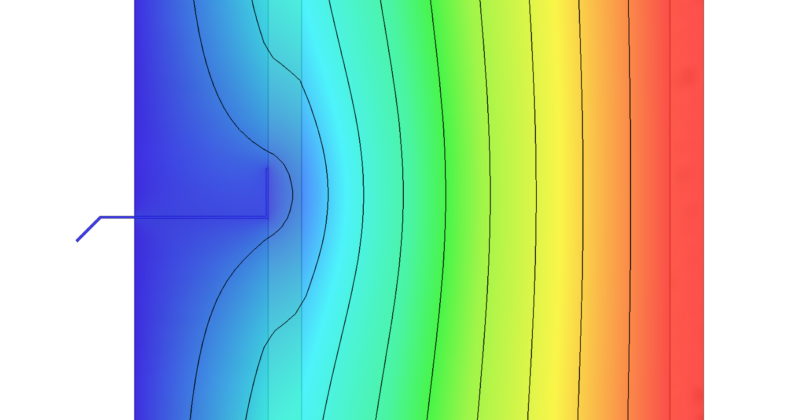
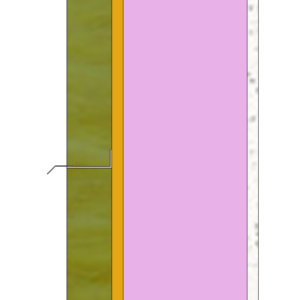
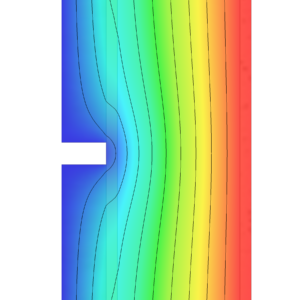
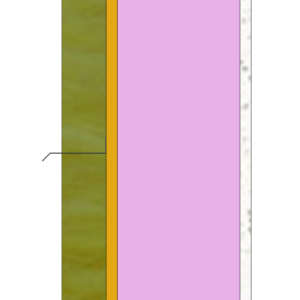
  1. A detail showing a 1″ gap in the exterior insulation, which most would identify as a construction defect.
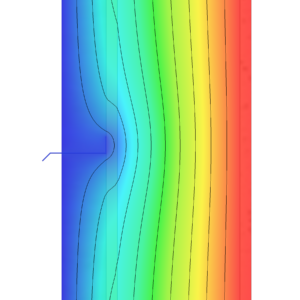
  2. A flashing detail where a strip of aluminum drains to the exterior, which many consider a good solution.

While the occurrence of 1″ gaps in the exterior insulation of buildings is hopefully limited, metal flashing details can add up to hundreds of linear feet in single family buildings and thousands of linear feet in commercial buildings.

Now, the question arises: Which of these details is preferred?

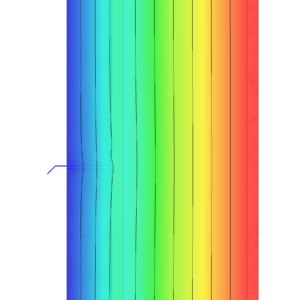
From a thermal standpoint, both details actually perform virtually the same. In a laser-focused attempt to solve a moisture problem, we have created an energy-efficiency problem.

Fortunately, there is good news. We can achieve the same level of drainage detail by replacing the metal through flashing with non-metal flashing. By doing so, we maintain the integrity of the exterior insulation while still ensuring efficient drainage.

How much does this matter, you ask?

In a world where our buildings are becoming more and more efficient, the closer we get to zero, the more every detail counts. Through-wall metal flashing has made the difference in reaching thermal comfort goals in past Emu projects, and sometimes the difference in achieving Passive House certification.

In conclusion, when it comes to building science details, it is vital to consider the larger picture. While a 1″ gap in exterior insulation may be perceived as a construction defect, a flashing detail with metal components can have a similar impact. By specifying non-metal flashing alternatives, we can enhance the thermal performance of our buildings while continuing to address the very real potential for moisture damage.

The lesson of the story? Make sure your solution is not creating another problem!

If you found this interesting and want to challenge your brain to question other industry norms, consider joining one of our Passive Design/Build Boot Camps or one of our Online Crews, where we delve into the WHY behind our building science decisions from an un-sponsored, brand-neutral, research-led perspective.

underperformance-of-tilted-glass-6

Underperformance Of Tilted Glass Units

This is one of those cases where the label performance should not be taken at face value: U-value of glass units – if the glass is meant to be installed horizontal or with a tilt angle. The analysis shown here illustrates the performance of two different IGUs, depending on the tilt angle. 

Thermal performance of insulated glass units (IGUs) is driven by the combination of 1) the number of gas pockets (or in layman’s terms, the number of glass panes), the thickness and the fill of the glass pockets, and the low-emissivity coatings (low-e) on the glass panes).

The gas pockets provide insulation because the gas (whether air, Argon, or Krypton) conducts less heat than a solid. The more still the gas remains, the higher its insulation property, the lower the heat losses.

However, the gas does move. In doing so, it is subject to gravity, meaning that its ability to provide insulation is impacted by the tilt angle of the IGU.

Unfortunately, manufacturers provide glass U-values assuming the glass is vertical, even for IGUs intended to be installed horizontally or at an angle – as in the case of skylights. In other words, the label value may not represent the actual performance of the glass.

The performance gap is not negligible – the heat losses through the glass can be up to 30-35% higher than the label value.

Of course, this does impact the risk for condensation, as well as the whole building energy performance.

#buildingscience #performance #performancegap #passivehouse #highperformance #netzero #window #skylight #fenestration #energy #energymodeling #condensation

Originally posted to Instagram here. Follow that link to join the discussion.

Screen-Shot-2022-05-03-at-6.49.38-PM

Energy Demand vs Load in Passive House | Monday BS

Do you use the terms “demand” and “load” interchangeably? Well… stop. 🙂 There is a subtle yet important difference, and the closer you get to Passive House level the more it matters!

Join Emu Mariana for this week’s Monday B.S. (building science) – just a quick 5 minutes on the core difference between demand and load.

TRAINING ANNOUNCEMENT: Thanks to EcoCor, we have been invited to come run a Passive House Builder Boot Camp in Maine this Jun 6-10, 2022. Interested in learning more about it? Check out our website. Registration links will be up asap. https://mediumslateblue-lion-732275.hostingersite.com/training/passive-…

___

What is this series? We’re trying a thing. Join Emu Co-Founder, Mariana Pickering, for a super casual and quick 5 -10 min video every Monday covering some commonly asked B.S. (Building Science) questions we get as Passive House educators. Requests for future topics highly encouraged in the comments!

2022.02.28-Monday-BS-thermal-mass-featured-image

The impact of thermal mass vs insulation | Monday BS

A common misconception, especially in the world of sustainable or “green” building, is the impact of thermal mass vs thermal insulation. A lot of this confusion comes from well meaning design movements like “Passive Solar” and earthships. Often, in single-family design, there is an outsized expectation that the effect of thermal mass will be much greater than it is on the performance of the house. In other words, in residential buildings the impact of thermal mass is secondary compared to other elements of the building envelope (e.g. insulation, air sealing, windows, shading). On the other hand, in larger buildings with highly variable occupancy, thermal mass can start to be part of a strategy to optimize mechanical systems.

Research sources (some in German language):

___
What is this series? We’re trying a thing. Join Emu Co-Founder, Mariana Pickering, for a super casual and quick 5 -10 min video every Monday covering some commonly asked B.S. (Building Science) questions we get as Passive House educators. Requests for future topics highly encouraged in the comments!

DF28CDFF-07BC-4713-99BA-D8D6F173A6DD

Anatomy of an ERV | Monday BS

Monday B.S. (Building Science) with Emu Mariana – Jan 10, 2022

Ever curious about these mysterious HRVs and ERVs that everyone in the Passive House world is always talking about? Tune in for a simple breakdown of this key element – the “lungs” of the building. Plus, see Enrico take an ERV apart to show us all the parts.

Learn more about the Healthy Side of Zero Energy

What is this series?

We’re trying a thing. Join Emu Co-Founder, Mariana Pickering, for a super casual and quick 5 -10 min video every Monday covering some commonly asked B.S. (Building Science) questions we get as Passive House educators. Requests for future topics highly encouraged in the comments!